The past six years have been difficult for the world, including the COVID-19 pandemic and the wars in Ukraine and Gaza. The unnecessary war started in the Middle East by Israel and America by attacking Iran has plunged the world into deeper crisis. Since we live in a globalized world, this war is creating economic problems everywhere and India is also affected by it. The LPG shortage is having a major negative impact, slowing growth, increasing inflation and the Reserve Bank of India has warned that it may rise further. The Indian Rupee is witnessing one of its sharpest declines ever. In fact, among the major currencies of the world, the Indian Rupee is the one which has registered the sharpest decline. Why is India becoming so affected by the economic impact of this war? The short answer is this: while India’s fundamentals are strong, it is putting very little effort into business policy-making. After my recent six-week trip to India, I was feeling optimistic. This time I visited more educational institutions and universities than in the last several years. The journey began with a conference at the beautiful hilltop campus of Symbiosis International University in Pune. My next stop was Kolkata. It was a special experience to deliver lectures in the shadow of a rich history at Presidency College and talk to enthusiastic student-teachers. From Kolkata I also went to Purulia, where I spoke to the students of Felix School. The school was running its Discover the World of Economics programme. Students came from all over India to hear lectures by mathematician Mahan Maharaj, economist Prabhat Patnaik and others. Amidst this tribal region, it was impossible not to feel optimistic while discussing economics, politics and geometry with students from nearby villages as well as from bigger cities. Last stop was Delhi, where I lectured at the Guru Gobind Singh College of Commerce. There he met many of his students from the time he taught at the Delhi School of Economics. Once again meeting talented students and teachers who were full of enthusiasm made me optimistic about India. While talking to people at all these places, seeing their warmth and intellectual brilliance, it became clear that India has a huge amount of human talent and many capabilities. However, I have to admit that when I look closely at government policy and what is happening in India’s economy (and I am not even talking about the Iran war here), I am worried. By focusing only on slogans and not paying attention to actual policy on the ground, we are causing deep damage to the economy. In the last ten-twelve years, we have been slipping backward in the field of research and statistics. Now most of the focus is on the headline-GDP. GDP refers to the total income earned by all the people in the country. But it does not tell anything about the distribution of this total amount among the population. If the income of two-three families is very high then GDP will show good growth even if a large number of people are unemployed and in bad conditions. Not surprisingly, India’s leaders rarely talk about per capita income, youth unemployment and the living conditions of the bottom 50 percent of the population. India is also losing independence in its foreign policy. Whereas India has been a leader of the Non-Aligned Movement and was highly respected for its intellectual leadership. My third concern is about higher education. The IITs, Delhi School of Economics and many other institutions, started soon after independence, provided excellent education and world-renowned researchers worked there and published research papers. But a great injustice is being done to the country by not respecting the achievements of higher education of the last 75 years. I am hopeful that India will emerge from the present economic difficulties, realize its past intellectual achievements and live up to the ideals of democracy and secularism that have earned us a special place in the world. (These are the author’s own views)
Source link
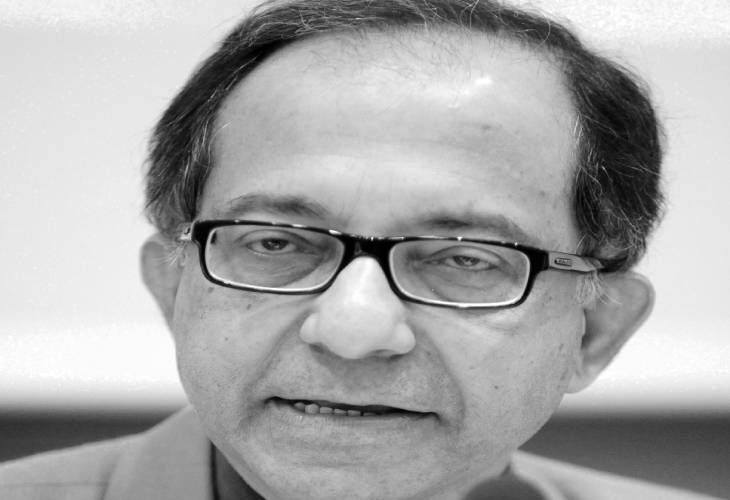
Kaushik Basu’s column: Along with new hopes, some challenges also exist in the country.