- hindi news
- opinion
- Dr. Sukanta Majumdar Column | Nipun Bharat Mission & India Education Reform
8 hours ago
- copy link
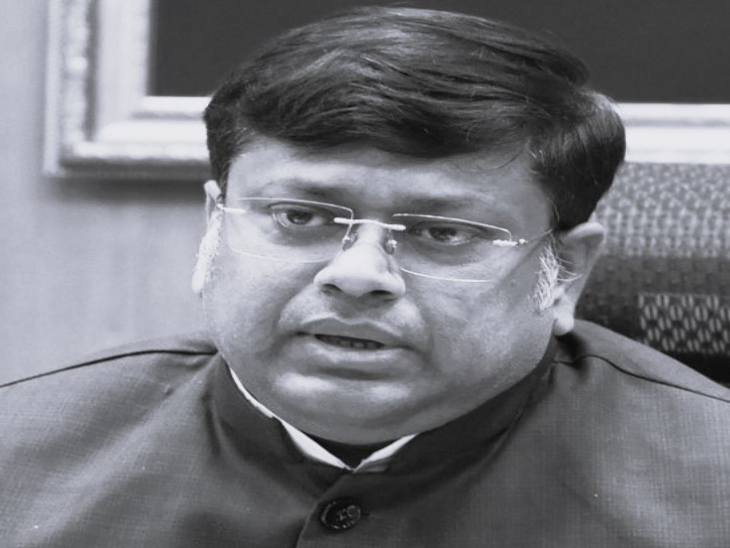
Dr. Sukant Majumdar Union Minister of State for Education
When our government launched the Nipun Bharat Mission in 2021, we set a goal that was easy to say but hard to achieve – that every child in India can read with comprehension and solve basic mathematics by the end of Class 3. Five years later, the available evidence suggests that India has begun a quiet but transformative change in basic education.
We have built one of the largest school education systems in the world, with 25 crore students, 98 lakh teachers and 15 lakh schools. Through this, almost every child was sent to school. But this was only the beginning. For many years, large numbers of children continued to progress through the early grades without acquiring basic literacy.
The National Education Policy 2020 identified this shortcoming as a ‘learning crisis’ and the Nipun Bharat Mission was launched as a solution to this challenge. We also added resources to this pledge and the annual allocation of the Mission has been increased from about Rs 2,000 crore at the time of its launch to about Rs 4,800 crore today.
Early signs are encouraging. A major transformation is quietly taking shape in basic education across the country, reflected in both national assessments and independent evaluations. According to NCERT assessments, Class 3 students scored an average of 64 percent marks in languages and 60 percent marks in mathematics.
Corroborating these findings, the ASER-2024 report shows that India has recorded the fastest improvement in basic education in the last two decades. The proportion of Class 3 children who know how to do simple addition and subtraction has increased to approximately 34 percent. Now about 23.4 percent of Class 3 children can read Class 2 text comfortably, which is an increase of 7.1 percentage points.
Yet the most encouraging story lies behind these national averages. Now children in rural India are performing better than their urban counterparts in primary classes, while girls are ahead of boys. We are reaching children who have historically faced the most deprivation in education, especially those living in remote and resource-poor areas. This is helping to reduce long-standing inequities in learning outcomes.
This progress on such a large scale is not just a coincidence. For this, planned, structural reforms have been made. They have changed the entire system of providing basic education. The learning process has been made more interesting and effective through low-cost teaching-learning materials i.e. TLM.
UP is an excellent example of this, where a comprehensive TLM system has been developed for classes 1 to 3. This includes print-rich classrooms, workbooks and game-based Wonderboxes. A child who learns to read, reason and solve problems in the early years grows up to become a strong workforce and the country’s economy becomes stronger. Basic education is therefore at the heart of our vision of a developed India. (These are the author’s own views)