- hindi news
- Opinion
- Raghuraman Column | Water Conservation & Leakage Prevention Techniques
16 hours ago
- copy link
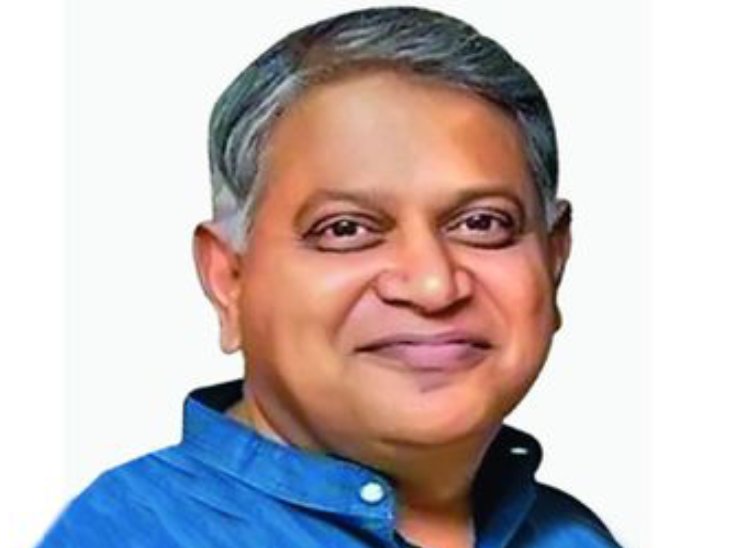
N. Raghuraman, Management Guru
Most of us may not have seen a drone fitted with a thermal camera flying above us. From a height of about 70 meters, it can detect even very slight changes in temperature on the ground. If there is sewage leakage somewhere then the ground there will be hot, if there is water leakage somewhere then that part will be cold.
This drone flies not only over cities but also over lush green fields and pastures. The index camera installed in it maps the growth of crops and captures even the normal changes in it. If there is leakage of water for a long time then changes in the growth of crops start appearing there. There are some drones which are called ‘cage drones’.
They fly inside large water pipelines and detect changes in pressure. It is similar to a normal drone, but it has a 360-degree carbon fiber or plastic cage around the propeller and body. These ‘drones in a box’ are remotely operated machines that will be flown like thunderbolts over remote areas by companies supplying drinking water to homes in the UK, to identify such changes.
Some officers have ‘KRA’ (Key Result Area) at their workplace only to ensure that water reaches people’s taps. Since pipelines are laid in different years, they require upgrades from time to time and urgent repairs at many places. In such a situation, this new technology becomes helpful to them.
Recently they trialled something called ‘Aquaria’. This substance, like blueback, is injected into the pipe, which reaches the leaking hole through pressure and seals it. Since the change in climate pattern due to El Nino has now become a reality, every country is making efforts to save water.
You might be thinking why am I talking about leakage when it is raining from the sky? The reason is that India receives only 4% of the rainfall on earth, whereas more than 18% of the world’s population lives here. The irony is that about 30-40% of our total rainfall gets wasted in the ocean.
At the same time, 20-25% of the water evaporates before it reaches the ground. That is why most of our population has to exploit groundwater. Due to these worrying figures, Prime Minister Narendra Modi recently appealed to the people in ‘Mann Ki Baat’ to revive the water bodies. He appreciated the efforts made by the public and authorities for rain water conservation in Nashik in Maharashtra, Nandyal and Vizianagaram in Andhra Pradesh, Bhubaneswar in Odisha and Korba in Chhattisgarh.
Under the ‘Catch the Rain’ campaign, Korba Municipal Corporation of Chhattisgarh started constructing several recharge-wells and hundreds of recharge pits in private and government buildings and infrastructure projects. This initiative has been taken by Corporation Commissioner Ashutosh Pandey (2019 batch IAS officer). This has increased water storage capacity and groundwater level.
This initiative has helped the Corporation in preventing wastage of rain water. Rain water harvesting facility has now been made mandatory in every new construction under the jurisdiction of the corporation. Interestingly, borewells yielding less water are being re-drilled so that they can be used as recharge pits. ‘Catch the Rain’ may be a seasonal campaign, but stopping water leakage is a year-round task. This is the responsibility not only of the officers but of every common man.
The bottom line is that Just like a swan keeps moving its feet under water, similarly we have to keep making continuous efforts on water, so that life savers can conserve this water and make the earth greener handed over from the elders and hand it over to the future generation. Remember ‘if there is water there is life.’