- hindi news
- opinion
- Minhaj Merchant Column | Pakistan Balochistan Crisis & Punjabistan Fear
14 hours ago
- copy link
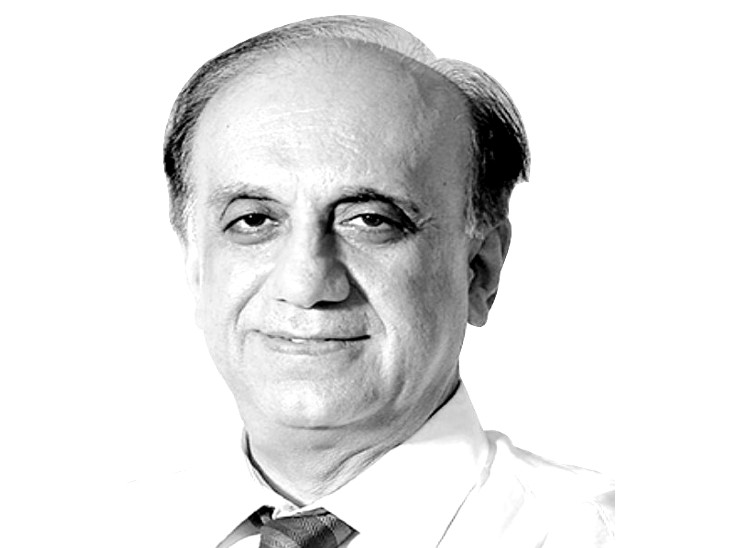
Minhaj Merchant, Author, Publisher and Editor
44 percent of Pakistan’s land area falls in Balochistan. A dispersed population of about 14 million lives in this area, which is only a small part of Pakistan’s total population of more than 250 million. Ever since Pakistan occupied Balochistan in March 1948, the province has been fighting for independence against Pakistan.
At the time of partition in 1947, Balochistan was an independent princely state named ‘Kalat’, whose ruler was Mir Ahmed Yar Khan. The Pakistani government had put pressure on Kalat to merge with Pakistan. However, in the last seven decades since then, relations between the Baloch leadership and the Pakistani government have remained tumultuous.
Balochistan Liberation Army (BLA) has intensified attacks on Pakistani Army in the last few weeks demanding independence from Pakistan. On July 5, Balochistan Liberation Army fighters killed nine policemen guarding the Mangi Dam in Balochistan’s Ziarat district.
On 8 July, BLA militants ambushed a Pakistani army vehicle, killing 11 soldiers. Meanwhile, BLA militants also bombed a Pakistan Army convoy in Mastung district, killing an estimated 45 soldiers. In a symbolic move, Baloch leaders have declared independence from Pakistan and named their country ‘Republic of Balochistan’.
However, no country has yet recognized these claims. It is important to remember here that both China and America are interested in a peaceful Balochistan. China is building infrastructure in Balochistan by building the China-Pakistan Economic Corridor (CPEC) under its Belt and Road Initiative (BRI). At the same time, America wants to access the important minerals, gold and copper mines and oil wealth of Balochistan.
India is also keeping an eye on this entire issue. Local Baloch leader Mir Yar Baloch has released the national anthem of the Republic of Balochistan and requested India to open the embassy of Balochistan in New Delhi. However, for now, New Delhi has given a cautious reaction on this, because the security situation around Balochistan’s capital Quetta still remains unstable.
Pakistan has neglected Balochistan since its occupation in 1948. That is why even today it is one of the poorest provinces of Pakistan and remains a fertile ground for global terrorism. Following the 9/11 terrorist attacks in the US, Afghan Taliban leader Mullah Mohammad Omar led an insurgency against US-led NATO forces in Afghanistan.
Mullah Omar fled to Pakistan in 2001. The Pakistani government had kept him hidden in Quetta itself. That is, on one hand the Pakistani army was pretending to support NATO, while on the other hand it was also helping the Taliban. It has been the tendency of Pakistani leaders to play such a double game. He also kept Osama bin Laden hidden in Abbottabad for almost a decade, until he was found and killed by US Navy SEALs in 2011.
Balochistan’s liberation movement may not have received widespread international support due to Pakistan’s usefulness to Western countries, but it can be considered the beginning of Pakistan’s disintegration on ethnic lines. On the other hand, dissatisfaction is also increasing in PoK. There is turmoil in Khyber Pakhtunkhwa. In Sindh, which shares border with Balochistan, protests have been going on for a long time against the dominance of Punjabis in the Pakistani army and government.
Pakistani Punjabis, with a population of 112 million (44%), are the most prosperous and influential ethnic group in the country. But the irony is that while Punjabi Pakistanis constitute 44 percent, Punjab is spread over only 26 percent of the country’s land area. On the other hand, Baloch population is only 6 percent, but Balochistan covers 44 percent of Pakistan’s land area.
If Balochistan, Khyber Pakhtunkhwa and Sindh also separate from Pakistan like Bangladesh, then it will remain just a small state named ‘Punjabistan’. Similar disintegration had occurred in Yugoslavia in the past in Europe. After long ethnic conflicts, seven independent nations emerged – Slovenia, Croatia, Serbia, Montenegro, Bosnia and Herzegovina, North Macedonia and Kosovo.
However, there is also a clear difference between the two situations. Following the end of the Cold War and the dissolution of the Soviet Union, the US-led NATO countries deliberately disintegrated Yugoslavia as a geopolitical strategy. But in the case of Pakistan, America’s interest is in keeping the country united.
Since 1947, America and Britain have been using Pakistan as a country to fulfill their geopolitical objectives. Pakistan’s military dictators are easy to deal with and equally easy to bribe them. CIA and ISI work together internally.
If we look, Pakistan has historically been a major non-NATO ally of America. America has been ignoring terrorist attacks carried out by Pakistan on Indian citizens since 1989. But can he also ignore the revolution smoldering in mineral-rich Balochistan?
Balochistan’s freedom movement is important… Even if the Balochistan liberation movement does not receive widespread international support, it can be considered the beginning of the disintegration of Pakistan on ethnic lines. There is also turmoil in PoK and Khyber Pakhtunkhwa. Protests have been going on for a long time in Sindh against the dominance of Punjabis. (These are the author’s own views)