- hindi news
- Opinion
- Priyadarshan’s Column: The Truth Is That Delimitation Of Lok Sabha Seats Is Essential
22 hours ago
- copy link
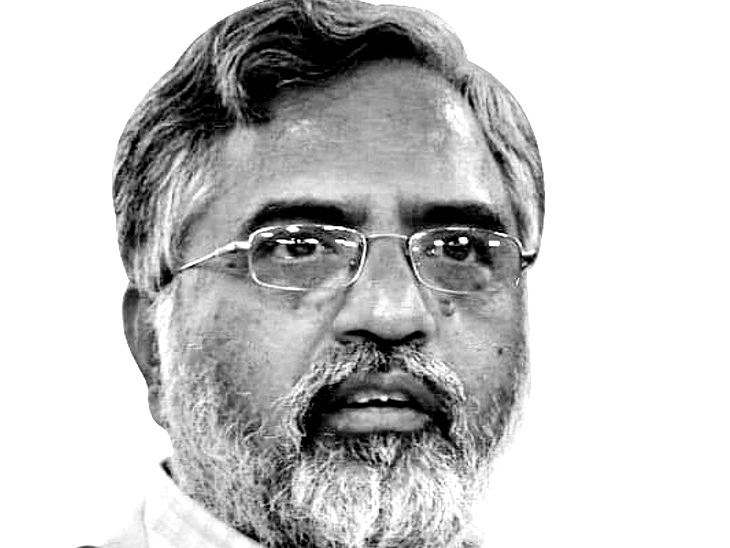
Priyadarshan writer and journalist
The Constitution Amendment Bill has fallen. The opposition said that the government is engaged in delimitation under the guise of women’s reservation. But whatever the controversy over delimitation, the fact remains that there is a need for delimitation of Lok Sabha seats – both constitutionally and practically.
The last time delimitation of Lok Sabha seats was done in 1976 and according to the system of one MP for every 10 lakh people, 550 MPs were fixed for the population of about 55 crores. That’s why the delimitation of seats was banned for the next 25 years – i.e. 2001. In 2001, Atal Bihari Vajpayee’s government again extended this ban for 25 years.
That means now there is a need for delimitation in 2026. The practical aspect of this need is that currently on an average there is one MP for every 26 lakh people. Obviously, this is almost impossible public representation. But the crisis is that relimitation of Lok Sabha seats on the basis of population will reduce the political strength and status of those states of the South which have done a fair job of population control.
The solution that the government has found for this – to directly increase the seats in all the states by 50 percent – still does not solve the problem, because ultimately the benefit of this will also go to the big states, whose numerical strength will become bigger. Secondly, the demographic principle of democratic representation that we have adopted is damaged by this. Then what is the way?
In fact, there is a need to understand the basic grievance of the South. India’s federal structure is in the grip of a few big states. Uttar Pradesh, West Bengal, Maharashtra and Bihar constitute almost half of the Lok Sabha. The importance of other states remains less. Be it delimitation according to population or in the ratio of 50 percent, ultimately their power will increase. India’s federal structure will continue to waver.
Actually India again needs reorganization of the states. In 1956, states were reorganized on the basis of language. After that, of course, many more states were formed – Sikkim came and joined, Bihar, Uttar Pradesh and Madhya Pradesh were broken to form Jharkhand, Uttarakhand and Chhattisgarh, Telangana was carved out of Andhra Pradesh, Jammu and Kashmir was stripped of its statehood, but much bigger changes are needed. States which are very large can be divided into more than one part.
In 2011, when she was the Chief Minister of Uttar Pradesh, Mayawati had sent a proposal to divide Uttar Pradesh into four parts. Under this proposal, Purvanchal, Awadh Pradesh, Bundelkhand and Harit Pradesh or Western Pradesh were to be created. Today, when the population of UP has crossed 20 crores, then this division can give some lightness to this state to run.
Bihar, Bengal, Maharashtra, Madhya Pradesh, Rajasthan and Tamil Nadu can also be divided into at least two parts. But this whole exercise demands very careful restructuring. If such reorganization becomes possible, the complaint of dominance of some states over the federal structure will reduce. Just as there can be more than one Hindi speaking state, similarly there can be more than one Marathi or Bengali speaking state. The same thing can happen with Tamil or Kannada speaking states also.
In the formation of new states, their cultural makeup can also be kept in mind and the boundaries of some states can be shifted here and there. If there are smaller states then development plans will be made in a better way. It may be possible that Chief Ministers of big states may not like this.
For example, Uttar Pradesh Chief Minister Yogi Adityanath cannot accept that Uttar Pradesh gets divided into many parts, because this will reduce his political power. But if we want the federal structure of India to remain healthy and the southern states not to complain of step-motherhood, then sooner or later we will have to move towards the reorganization of the states.
- If we want the federal structure of India to remain healthy and the southern states not to complain of step-childhood, then sooner or later we will have to move towards the reorganization of the states. Delimitation of Lok Sabha seats is also needed today.
(These are the author’s own views)