- hindi news
- opinion
- Pavan K. Varma’s Column: The Prudent Course Is To Become Partners With Our Neighbors
5 hours ago
- copy link
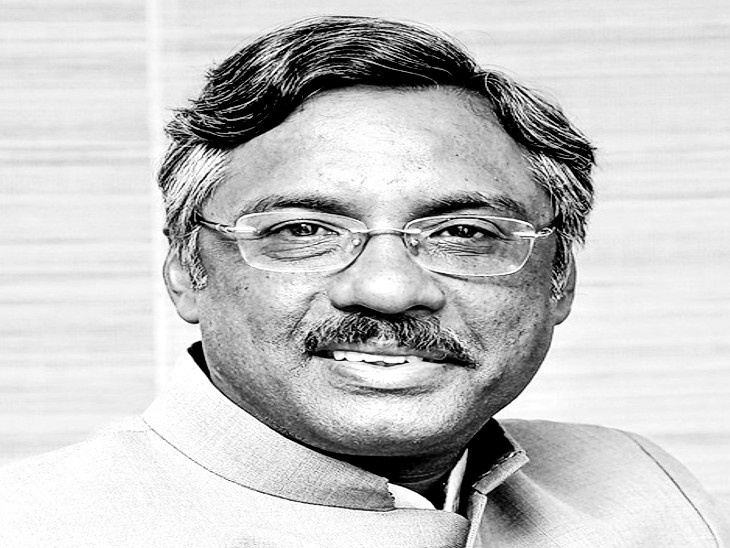
Pawan K. Verma, former Rajya Sabha MP and diplomat
India’s rise as a major power demands a stable and cooperative neighbourhood. No country can claim dominance in the world without managing the strategic environment around it. This was the rationale behind the establishment of SAARC in 1985. But this organization has become lifeless after the cancellation of the proposed 19th summit in Islamabad in 2016 due to Pakistan-sponsored terrorism.
There are many such examples in history, when countries left behind their mutual rivalries and created institutions of regional cooperation. Such institutions came into existence because leaders understood that geography was a permanent reality, while conflict was merely an option.
The challenge was to transform geographical proximity from a source of tension into a means of collective progress. The most notable example of this is the EU. Britain and France were rivals for centuries. Germany fought devastating wars against both of them. Europe was extremely sensitive about protecting national identities. Yet, after the tragedy of the world wars, Europe gradually realized that the path to prosperity and security lay not through conflict but through cooperation.
The result began a process that eventually evolved into the EU. It is one of the most successful examples of regional integration in modern history. The African Union also emerged despite the boundaries that colonial powers had arbitrarily set. There were also ethnic conflicts and inter-state disputes. ASEAN also brought together countries that had previously experienced mutual distrust and conflict.
Indonesia and Malaysia were embroiled in a confrontational conflict in the 1960s. Singapore’s separation from Malaysia in 1965 took place under bitter circumstances. There were long-standing border disputes between Thailand and Cambodia. Nevertheless, ASEAN developed into a highly effective regional forum because its member states understood that the best path to economic development and strategic stability lay through collective efforts.
Similarly, the Organization of American Nations (OAS) was also established among countries whose history was full of territorial disputes, ideological divisions and political instability. An important element in all these examples was the existence of shared cultural and civilizational ties. The same logic applies equally to South Asia. Despite political differences, deep cultural unity has existed in South Asia.
The people of this region are linked by history, language, religion, food, culture, literature, music and networks of family-social ties that have existed long before the rise of modern nation-states. But sadly, SAARC’s progress remained hostage to the strained relations between India and Pakistan. Decades of distrust crippled collective initiatives.
China also saw opportunities to advance its strategic interests by taking advantage of regional divisions. Despite this, the logic behind SAARC remains equally relevant today. India’s relationship with South Asia is not only geographical but also civilizational. India and Sri Lanka have deep ties through Buddhism. Nepal has enduring cultural and religious ties with India. Bangladesh shares deep linguistic, historical and emotional ties with India.
Even with Pakistan, our common history, age-old heritage of culture, language, literature and music provides a strong foundation for human-to-human relations. The solution does not lie in abandoning SAARC, but in reviving it with patience and pragmatism.
Trust cannot be built overnight. But when people directly experience the benefits of cooperation through trade, tourism, educational exchanges, cultural programs, interaction, energy cooperation, etc., then they themselves become advocates of that cooperation. As an emerging major power, the first priority for India should be to strengthen its immediate neighbourhood. The geography of South Asia has made us neighbours. But it makes sense that we also become allies.
- Geography is a permanent reality, while conflict is merely an option. In such a situation, the challenge is to transform geographical proximity from a source of tension into a means of collective progress. History also teaches the same lesson.
(These are the author’s own views)