- hindi news
- Opinion
- Syed Ata Hasnain’s Column: The Capability To Strike—and The Prudence To Halt
20 hours ago
- copy link
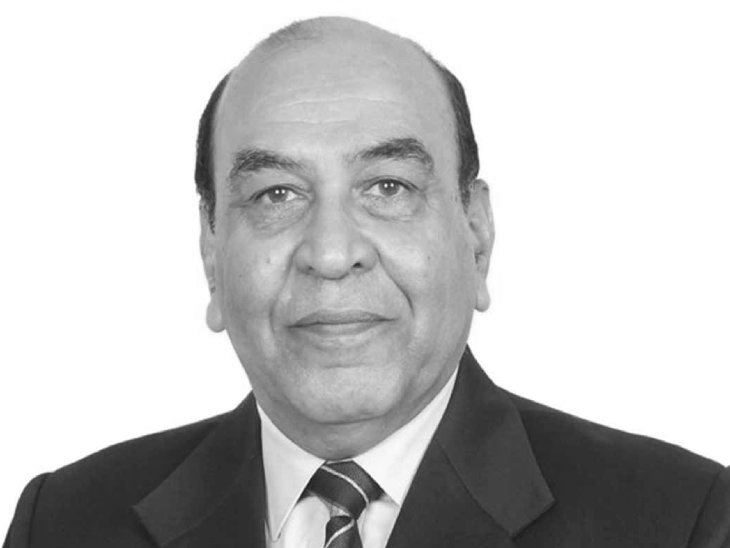
Syed Ata Hasnain, Governor of Bihar and former commander of Kashmir Corps
One year after Operation Sindoor, if we think about the biggest lesson learned from it, it is neither the accuracy of the attack nor the speed of its implementation, but the strategic clarity that formed its basis. India had shown that the use of force need not be maximalist to be effective. At a time when countries are often embroiled in long-running conflicts, India chose a different path. This was a restrained, well-planned path based on long-term national interests. This is what has shaped its global reputation.
Recent conflicts around the world have exposed a harsh truth; Today it is easy to start wars, but much more difficult to end them. The concept of a decisive victory is becoming increasingly rare. Technology has leveled the balance of power in unexpected ways. Small or relatively less developed countries can also now draw major powers into protracted conflicts, which deplete both their resources and political will. The result is a strategic ambiguity in which costs are high, achievements are limited and the end state is unclear.
India’s approach thus reflects the understanding that the purpose of a show of force is not merely a display of power, but the achievement of specific and limited objectives within the broader national framework. Operation Sindoor was a symbol of this logic. Its aim was neither to change one’s geography nor to pursue maximalist goals; The objective was to convey a clear and credible message while maintaining strategic stability. In doing so, India restored a principle that is increasingly rare in contemporary geopolitics. And that is: disciplined use of power.
This discipline is often misunderstood as restraint born of caution. In fact, it is restraint born from self-confidence. India’s leadership demonstrated that it not only had the capacity and will to strike, but also the wisdom to stop after achieving its objectives. This balance between aggression and restraint is not easily achieved. This requires clarity of political objective, professional military capability, and an institutional culture that values results.
At the same time, India’s approach is based on an unwavering commitment to the security of its citizens. Protection of life and assurance of safety remain paramount. This requirement is not followed in isolation from long-term national interests. Rather, it is embedded in a broader strategic vision. It is a vision that recognizes that sustainable security is inseparable from economic development, social stability and global credibility.
A few more key elements of this approach are particularly notable. Such as clarity of purpose, in which power is used for defined and achievable results – not for indefinite ends. Controlled escalation, with the potential for decisive action. Coordination of means, whereby political, military, diplomatic, and informational tools work in harmony with each other. and the primacy of long-term interests, in which immediate responses are in line with the national interest.
This framework is deeply linked to India’s broader aspirations. The vision of a developed and prosperous nation demands sustained economic momentum. Widespread conflict disrupts the conditions that make development possible: investor confidence, infrastructure development, and social cohesion. Therefore, India’s strategic restraint is not its limitation, but its carefully chosen priority. It also reflects the understanding that the criteria of national power lies not only in military capability but also in economic strength.
- At a time when countries are often embroiled in long-running conflicts, India chose a different path. This was a restrained, well-planned path based on long-term national interests. This has shaped its global reputation.
(These are the author’s own views)