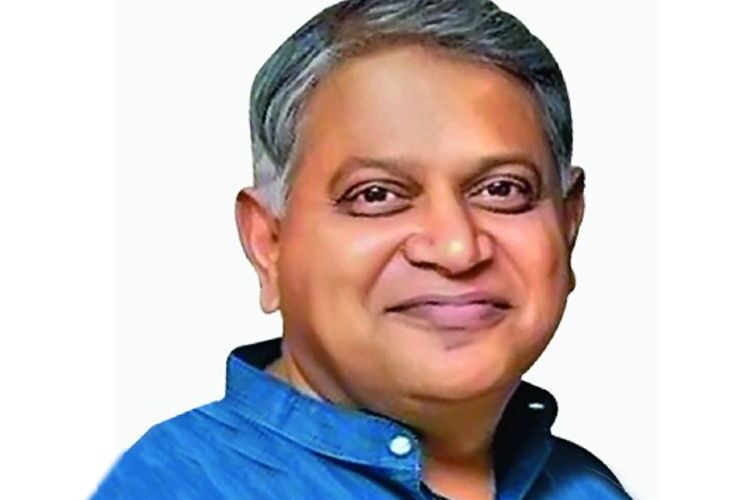
Who can take inspiration from Nishadraj Guh described in Ramayana, who helped people cross the river without any expectations? In the modern era, it is not necessary for someone to become a sailor like Guh. They can also build bridges. If they do this, they not only transport people from one side of the river to the other, but also transport a farmer’s produce to the nearest market so he can support his family, a student can go to school in the next village, and a pregnant woman can get better medical care. The same work was done by Padmashree Girish Bhardwaj. In 1989, the people of his birthplace Aletti village, 300 km from Bengaluru, came to him with a unique request to build a bridge to the next village. In his childhood, Bhardwaj had to take admission directly in the fifth class, because no child could cross the river after walking such a long time. Probably he might have also remembered Guh. Bhardwaj said, ‘I never built a bridge.’ Still the villagers said, ‘You are an engineer, you will find a solution.’ And then he accepted the challenge. Using locally available materials, community participation and simple engineering principles, they built the bridge at a low cost. This news spread faster than a river. Soon governments and communities across the country started calling him. Bhardwaj, popularly known as India’s ‘Bridge Man’, died this Tuesday at the age of 76. But the more than 140 suspension bridges he built in rural India still tell a story bigger than engineering. They’re a reminder that when you solve a broader problem, identity follows. The history of India is full of such examples. Take E. Sreedharan, who gave millions of people what even the most powerful people cannot – time. He understood that India’s rapidly growing cities needed efficient public transportation more than spectacular infrastructure. He changed the face of urban transportation by completing projects like Konkan Railway and Delhi Metro with extraordinary speed and integrity. Today millions of people are stuck in traffic less, travel safer and experience better lives, because one engineer focused on solving a transportation problem. The list of such people is very long. Dr. Verghese Kurien did not aim to become the father of milk revolution. He simply solved a big problem of rural India that dairy farmers should get fair price for their produce. Lakhs of people got benefit from it and got respect automatically. Dr. Bindeshwar Pathak did not run after awards. He solved the sanitation crisis through accessible toilets. Gave a respectable life to millions of people and changed the country’s thinking towards public cleanliness. Arunachalam Muruganantham also never thought that he would get international fame. She focused on a neglected problem – providing affordable sanitary pads to rural women. His innovation transformed the health, education and livelihoods of countless families. And in this list there is also Rajendra Singh, who is called the Waterman of India. He understood that water shortage was devastating villages and people’s livelihoods. Instead of relying solely on large dams, they revived traditional water conservation techniques and mobilized communities to restore rivers and groundwater levels. His efforts breathed new life into thousands of villages in Rajasthan. He proved that sustainable development succeeds when local people become partners in solving environmental challenges. One principle appears to be common in all these examples – recognize a problem affecting millions of people and dedicate yourself to the solution. When a teacher connects children with education, a doctor connects villages with healthcare, an entrepreneur connects farmers with markets, an engineer connects technology with common people, or someone connects hope with opportunity, the world always remembers who improved people’s lives the most. The bottom line is that when a person builds an extremely important bridge, people may forget his profession, but remember him for a long time.
Source link
N. Raghuraman’s Column: How can you become ‘unforgettable’ in people’s minds?