- hindi news
- Opinion
- Prof Manoj Kumar Jha Column: Women Reservation Meaningful Only With Equal Opportunities
4 days ago
- copy link
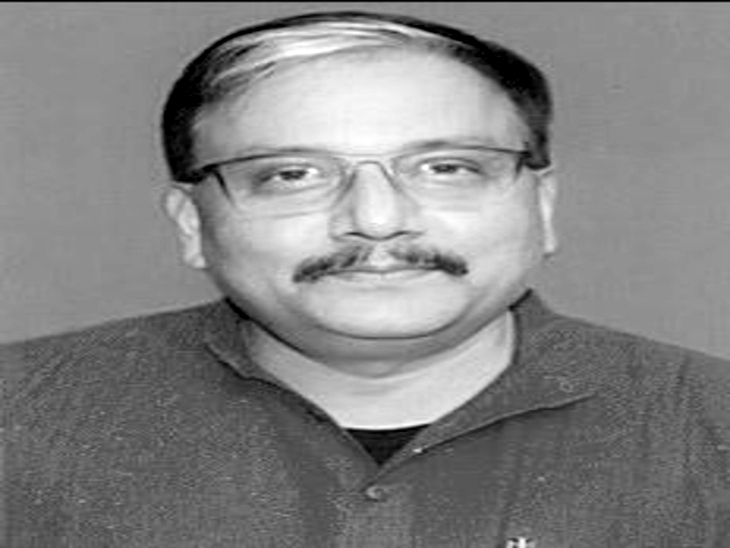
Pro. Manoj Kumar Jha, Rajya Sabha MP from RJD
Women’s reservation is being touted as a historic step towards removing the under-representation of women in legislatures. But amidst the celebration there is also an uncomfortable silence, and this silence is on the fundamental question of who these women will be, and more importantly, who they will not be?
The Indian state has historically acknowledged the multilayered nature of inequality. The constitutional provision of reservation for Scheduled Castes and Scheduled Tribes was not the result of any mercy or favor, but an acknowledgment of the deep structural deprivation that had marginalized these communities socially, economically, educationally and politically for centuries.
But when it comes to women’s reservation, a dangerous simplification emerges, as if women are a homogeneous category with similar experiences and opportunities. The reality is that the structures of power in society – patriarchy, caste and class – do not operate separately, but are intertwined with each other.
The life experience of a Dalit woman is different from that of an upper caste woman. The challenges faced by a tribal woman cannot be understood solely on the basis of gender. To ignore these differences is to erase social reality in the name of legislative convenience.
This is why the demand for quota within quota is not just a technical improvement, but an attempt to make the concept of representation meaningful. In its absence, it is almost certain that the benefits of reservation will be limited mainly to those women who are already relatively empowered – upper caste, urban and politically connected.
The barriers to entry into politics for women from marginalized communities – lack of economic resources, lack of social networks, limits on party support, deep-seated caste prejudices – do not disappear with the mere announcement of reservations. Rather, they may become more intense in this new scenario of competition.
In this scenario, a serious apprehension emerges – the slogan of women empowerment might become a medium to further strengthen the power of the elite class. This fear is not imaginary. The experiences of reservation for women in local bodies give important indications in this direction.
Women’s participation in Panchayats certainly increased, but several studies also showed that its benefits were often limited to women from dominant social groups. Women from deprived communities were either left out or limited to symbolic presence within the established structures of power.
Representation is a question of who is speaking, whose experiences are being represented, and which issues are being prioritized. A woman holding elected office does not in itself represent the interests of all women. Representation is possible only when women from diverse social backgrounds become part of the decision-making process.
This is the point where the need for quotas within quotas becomes apparent. Ensuring proportionate reservation for women belonging to Scheduled Castes, Scheduled Tribes and Other Backward Classes is not any kind of division, but an effort to make democracy more inclusive and equitable.
It is an acknowledgment of the fundamental truth that equality means not just the formal availability of opportunities, but also the recognition and removal of barriers that affect different groups in different ways. The argument against this is that this will make the system extremely complex. But complexity cannot be used as a justification for injustice.
The Indian Constitution has shown that it is capable of accommodating the complexities of social realities. Quotas within quotas do not simply redistribute seats, but attempt to change the balance of power. At the same time, it also highlights the inequalities that exist within the category of women.
Shouldn’t the benefits of reservation be limited primarily to those women who are already relatively empowered – upper caste, urban and politically connected? Then how will women from marginalized communities be empowered? (These are the author’s own views)