- hindi news
- opinion
- Dr. Arch Muthye’s Column: Without A Sound Understanding Of Demography, We Cannot Solve Problems
4 days ago
- copy link
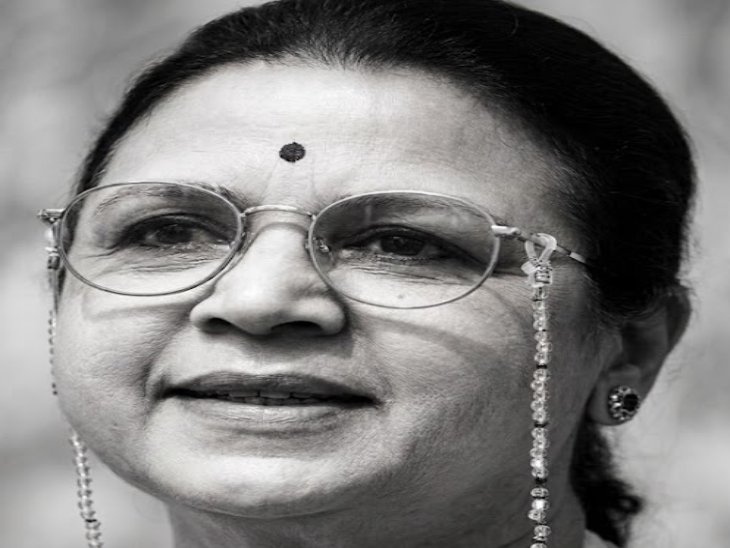
Dr. Archana Muthye, Executive Council Member, Indian Association for the Study of Population
India is not only facing the challenge of population growth, it is also going through complex situations of rapidly changing demographic balance. The question before the country is not only how much the population is growing, but also in what direction the population structure, distribution, age-profile, migration-trends and its impact on resources are going.
This is the reason why the high level committee formed under the chairmanship of Justice Navalekar is being considered as a far-sighted and timely initiative. Undoubtedly, the committee includes experienced and learned members associated with the fields of administration, justice and policy-making. But if demography experts were also directly involved, this initiative could become more comprehensive and academically rich.
Topics like population balance are not limited to just administrative or political discussions, rather they are linked to complex demographic dimensions like fertility-transition, population-change, age-structure, migration-pattern, dependency-ratio, urbanization trends and population-forecast. Understanding these changes requires expertise in mathematical modelling, long-term data analysis and statistical projection.
If there is no balance between employment generation, urban planning and resource management, our demographic dividend can also turn into a burden. It is in this context that the question of illegal migration is important. This is not just a matter of internal or border security, but is also an issue directly related to development, governance and resource-management. Governments make their plans on the basis of census, surveys and registered population.
The entire structure of schemes related to education, health, housing, food security, drinking water, employment and social welfare is based on this estimated population. But when a large number of illegal population gets added to an area, a gap arises between the actual demand and the government plan. Due to unplanned distribution of resources, many schemes are not able to fully achieve their basic objectives.
When the basic subject of the committee is to study the challenges related to population change in the country and suggest permanent solutions and policy measures, then why is there no direct participation of demographers in it? There is no dearth of expertise in this field in India. Kolkata-based Indian Statistical Institute is known for world-class research and population analysis.
Similarly, the International Institute of Population Sciences located at Deonar, Mumbai is a major institute for important studies like population studies, reproductive health, migration, demographic research and National Family Health Survey. There are many experts in these institutions who are capable of scientific assessment of the long-term effects of population change.
They also help in understanding what current trends in migration may lead to socio-economic changes in the future. This is why population commissions and policy committees in many countries include statisticians, demographers, epidemiologists and migration experts. Because they are also struggling with problems related to legal and illegal migration. India’s demographic diversity is also wide.
There are differences in fertility rates, population density, age distribution and migration patterns in different states. In such a situation, a uniform approach cannot suffice. Understanding regional realities requires data-based and scientific analysis. Formation of the committee is an important initiative of the Home Ministry, but the question of population is not only of the present but also of the future and future planning can be made only on the basis of facts, science and foresight.
(These are the author’s own views)