- hindi news
- opinion
- Kaushik Basu’s Column: Why Do Some Democracies Succeed And Others Fail?
6 hours ago
- copy link
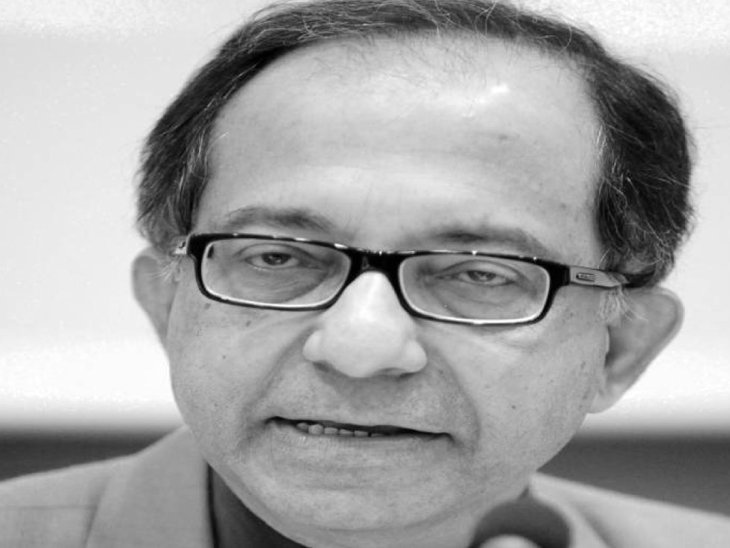
Kaushik Basu, former Chief Economist of the World Bank
There are many complexities inherent in democracy. At its core the difficulty lies in how to translate personal preferences into coherent social decisions. Nobel laureate economist Kenneth Arrow called it the impossibility theorem. Later, another Nobel laureate Amartya Sen developed this idea further in his book ‘Collective Choice and Social Welfare’.
Arrow and Sen did for political economy what Euclid had done for geometry in the past, and in the process exposed the limits of collective decisions. Although the theoretical understanding of democracy has increased over time, its empirical analysis has lagged behind.
In the absence of consistent data, understanding why some democracies succeed and others fail is often based on prejudice rather than evidence. To overcome this shortcoming, Sweden’s V-Dem Institute publishes its annual ‘Democracy Report’, which is one of the best efforts to take stock of the condition of democracy in the countries of the world. The institute’s latest report offers a sobering assessment of America’s current direction.
It warns that the speed at which American democracy is disintegrating is unprecedented in modern history. Given America’s dominance as the world’s leading democracy, such a decline has far-reaching implications beyond its borders. The report also points to a sharp decline in Western Europe, where populist leaders are taking lessons from Trump.
Arguably, any attempt to measure democracy is open to criticism, especially since there is no single universally accepted definition of democracy. Still, the V-Dem Institute’s report is perhaps one of the most painstaking efforts ever made.
It measures indicators that track the strength of democratic institutions and limits the scope for personal bias in evaluating countries with different political cultures. Not surprisingly, Denmark, Sweden and Norway top V-Dem’s 2026 index, while Eritrea, North Korea and Myanmar are at the bottom.
The report presents a disappointing picture. She underlines that the gains from the democratization wave of the late 20th century have now almost ended. But it also brings forward some encouraging developments.
For example, Sri Lanka has seen a democratic resurgence under the leadership of President Anura Kumara Dissanayake. At the same time, after the election victory of Lula da Silva in Brazil in 2022, it has become clear that the trend of democratic decline in a country can be reversed.
Despite this, the broader trend is clear to us. The process that began with Portugal’s Carnation Revolution in 1974—what political scientist Samuel Huntington called the third wave of democratization—expanded democracy in dozens of countries. Now that this wave is receding, nearly five decades of democratic progress is being adversely affected. Can this trend be reversed?
As Brian Stelter has said, two institutional tools offer the most hope—elections, which give citizens the power to change government, and the independent judiciary, which serves to check executive overreach.
As I argued in my book Beyond the Invisible Hand, in an interconnected global economy shaped by geopolitical inequalities, the leaders of major countries can be as important to ordinary people as their own governments.
This is especially true for smaller countries, which are economically or strategically dependent on larger countries. This problem would have been less serious if governments had followed international standards. But powerful countries have many ways to put pressure on weaker countries.
This is why measuring the health of global democratic governance cannot rely solely on summing up national scores. It should also include how major powers influence, limit and infringe upon rights beyond their borders. Such criteria are difficult to formulate, but without them, our understanding of democracy will remain incomplete.
- Two institutional tools hold the most promise amid the decline of democracy—elections, which give citizens the power to change the government, and the independent judiciary, which acts as a check on the executive.
(@ProjectSyndicate)