- hindi news
- opinion
- Reeta Kothari Column | Understanding Half Love & Modern Relationships
18 hours ago
- copy link
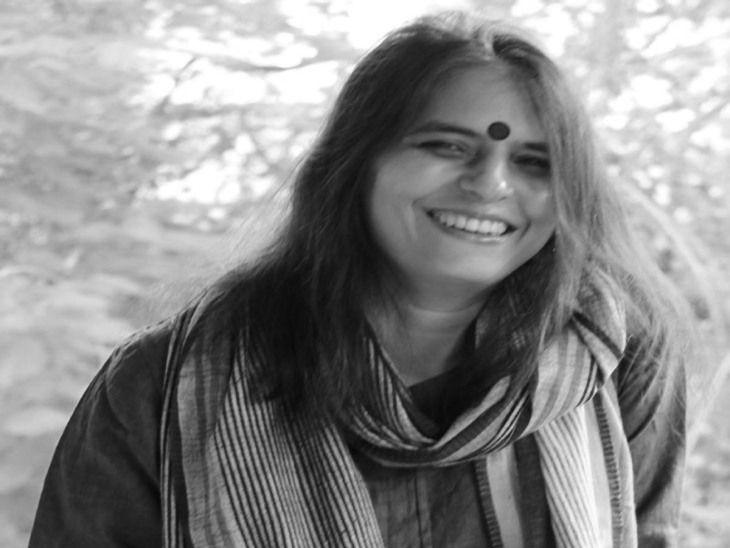
Rita Kothari, Professor of English and Linguist at Ashoka University
‘Love’ is not a physical thing. So when we say ‘Aadha Ishq’ or ‘Half Love’, what does it mean? When love is ‘half’, was it first full and then became half, or is it on the way to completion but not yet complete? The song from the film ‘Band Baaja Baaraat’ (2010) comes to mind: ‘Namkeen si baat hai har nayi si baat mein, teri khushboo chal rahi jo mere saath me, halka-halka rang beete kal ka deep-dark tomorrow ho jaaye, half of love is half of it, half of love will become half, steps will become promises of miles…’
Sometimes there is a new spring in the steps and hope is felt in the air. It may be that some special possibility is still far away, but it feels pleasant just to think about it. It may not be love, or it may be in some way. It’s a pleasant thought that makes one want to take small steps and see them move in a particular direction. It is not a matter of knowing or understanding yourself or anyone else, but there is such a light happiness in the mind, which may become the foundation of something big tomorrow. It is a slow and relaxed walk towards love.
When love seems incomplete, it rests on a pleasant possibility rather than on any firm belief. The modern style of this song lies in creating this in-between moment – between not loving and loving; Between a caring or neutral or give and take relationship and a desire to completely surrender oneself. It creates a feeling of slowly moving toward something new, unknown, and fascinating—an fascination that is not defined, but which is not scary either.
This is today’s ‘half love’; The remaining half may be tomorrow. Initially its colors were light, but tomorrow they may become darker. What is needed to get from one situation to another? This song avoids words like commitment. This indicates placing trust in time rather than a relationship or a person.
Of course, there is so much hope from the person one can love that this journey progresses and becomes worth loving; But this is not a definite or settled matter yet. That unspoken, unheard word is- leisure. gradually. At your right time. Seen from this perspective, this song is about ‘before’ love, or about the journey towards love. There is hope that the relationship will be consummated, but there is no anxiety about it. It is based on possibilities, not evidence. Therefore, it is too early to make any firm promises, and perhaps even out of date.
What matters in this moment is the freshness and enthusiasm of the feeling. The steps may be small, but there is no hesitation, and the destination may be unclear, but the journey is not bad. There is a lot woven around the word ‘half’ here – something that is honest and unhurried.
This ‘half’ is not a story of some lack, that some other half is missing and hence there is some incompleteness. Rather, it represents a part of what exists now, and its existence is enough to provide hope that there may be more to come. It is not a mathematical half of a whole, but a way to allow things to slowly unfold and move forward.
In V. Shantaram’s ‘Navrang’ (1959) too, Diwakar has imagined for himself a muse named Mohini, who looks exactly like his wife Jamna. In Mohini he finds the companion whom Jamna cannot become; Through this imagination he fulfills both his poetic and physical desires.
Mohini makes a wish feel fulfilled even though it is not actually present; But the song also reminds them that not everything is perfect in real life. The song is based on the tension between fulfillment of desire and feeling of incompleteness – ‘Aadha Hai Chandrama…’ Before this article crosses the limit of words, leave it halfway – perhaps the enjoyment will still remain.
There is so much hope from the person who can be loved that this journey progresses and becomes worth loving; But this is not a definite or settled matter yet. That unspoken, unheard word is- leisure. gradually. At the right time. (These are the author’s own views)