- hindi news
- opinion
- N. Raghuraman’s Column: Predicting A Medical Emergency Is Difficult, But Being Prepared Is Easy
4 days ago
- copy link
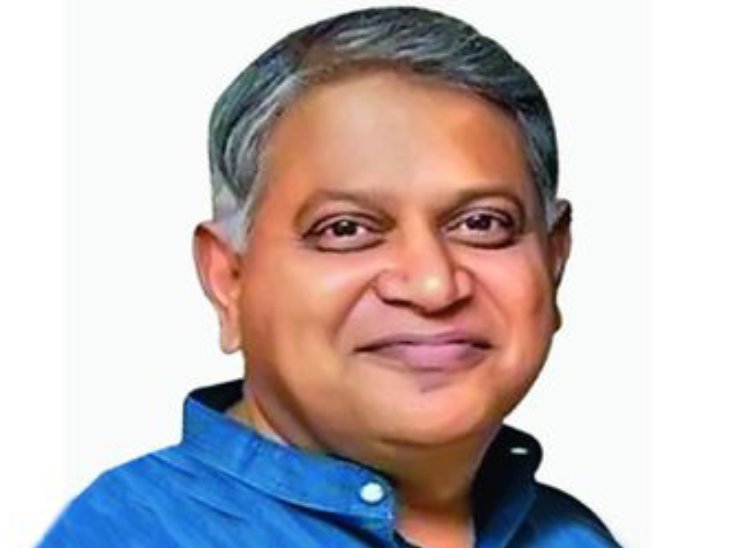
N. Raghuraman Management Guru
This Monday night at around 9 pm, Jalandhar industrialist Deepak Pujara was in the middle of his badminton game. For the past five years, he used to spend a few hours in sports and entertainment at the Raizada Hansraj Badminton Stadium to stay fit like many people in that city. While playing a shot, he suffered a cardiac arrest and collapsed.
Dr. Nitish Garg, a cardiologist from the same city who was playing on the other court, saw him falling and ran to help him. He gave cardiac massage, but Deepak did not respond. Although the hospital was only two minutes’ driving distance from the stadium, Dr. Garg felt that Deepak would not be able to travel even that short distance.
He continued CPR after administering an emergency pill from the stadium’s first-aid kit. Along with this, with the help of the staff, he was also engaged in arranging medical equipment and ambulance, so that he could reach the hospital quickly. When the staff brought ‘defibrillator’, a life-saving device that gives an electric shock to the heart, they gave a shock and the heart started beating. Deepak was then taken to the hospital, where investigation found two major blockages of 90% and 99%, in which stents were inserted.
It is heard that Deepak is now responding to the treatment and is recovering. This reminded me of an incident that happened exactly on the second day of Diwali in 2018. Some doctors were playing badminton to relax at Mahanandanagar Sports Arena in Nanakheda, Ujjain. One of the doctors collapsed within seconds during a post-game photoshoot.
The person who took the photo noticed that in the first photo the doctor was smiling, in the second the position of his mouth changed, in the third he leaned forward and in the fourth photo he fell on the ground. Australia’s renowned cardiologist Dr. Nilesh Mehta, who was present there, took charge of the situation and Dr. Nilesh Sharma, the then head of CHL Hospital, Ujjain, was also called for help.
Since many of the people playing there were doctors and those who had heart attacks were also doctors, the immediate action saved his life. Then in 2023, when I visited Jain Irrigation in Jalgaon, I saw that their medical department was distributing a small plastic container to all the employees and they were being requested to carry it with them wherever they go.
He took this decision after one of his senior officers died of a heart attack during a routine brisk walk. Every second counts in cardiac arrest. Knowing how to perform cardiopulmonary resuscitation (CPR) can help you maintain blood flow to a victim’s vital organs until help arrives.
It is also better to check whether your sports club, gym or workplace has an Automated External Defibrillator (AED). If its location is known in advance, many precious minutes can be saved. Even if you don’t have any heart disease, consult your doctor about keeping emergency medicines with you at all times.
Obviously, you can provide additional help to a doctor by giving him those medicines on the spot. The big lesson learned from all these incidents is that sudden cardiac problems can happen to anyone, anywhere. In such a situation, survival of life entirely depends on immediate action. You can’t predict a medical emergency, but you can be prepared for it.
The bottom line is that A good doctor friend is always better, as he gives unbiased opinion on any health problem. But if the same doctor is also your sports partner, then it is like having laddu in both hands.