- hindi news
- Opinion
- Pawan K Verma Column | Artistic Freedom Vs National Sovereignty Debate
11 hours ago
- copy link
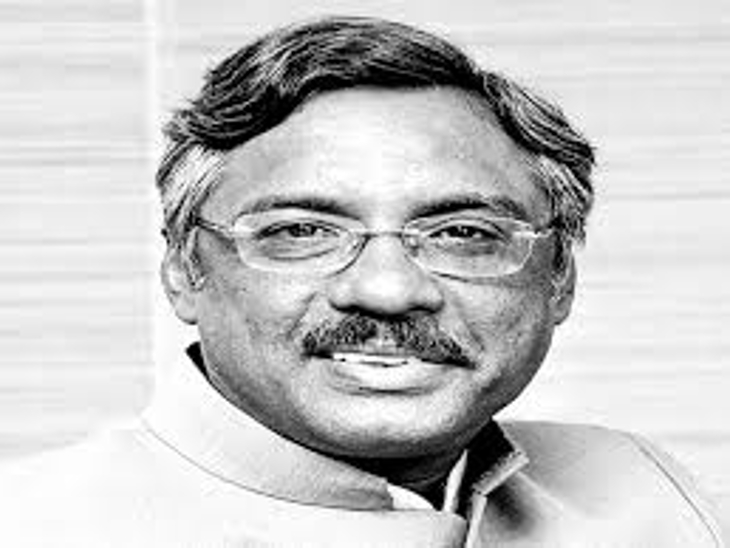
Pawan K. Verma, former Rajya Sabha MP and diplomat
No separatist movement against India has been successful since independence. The credit for this goes to the tools provided by democracy as well as to the firm response of the state in urgent situations. The controversy arising over the film ‘Sutlej’ should be seen in this context. Does artistic freedom also include the right to present a highly selective version of the history of one of independent India’s bloodiest militant movements? On the other hand, does the state also have the right to stop its performance? These are difficult questions, because in them the two objectives of democracy come face to face – freedom of expression and the responsibility to maintain public order and national integrity.
Banning a film often has the opposite effect. Censorship rarely succeeds in the digital age. On the contrary, restrictions sometimes create an image of victimhood. A film which under normal circumstances would probably have had a limited audience suddenly acquires the aura of banned truth and pirated copies of it become widely distributed. But while restrictions are often not effective, this does not mean that a film’s depiction of history cannot be questioned.
The Punjab insurgency was an armed separatist campaign aimed at the breakup of India. According to official estimates, more than 12,000 innocent civilians, about 1,800 security personnel, the then Chief Minister Beant Singh and 8,000 militants were killed. Apart from this, in June 1985, Air India flight ‘Kanishka’ was also bombed by Khalistani militants over the Atlantic Ocean.
All 329 people on board the plane died. Pakistan had a role in this conspiracy against India. ISI had provided training, weapons and money to militant organizations in Punjab. Efforts were made to incite separatist sentiments through radio broadcasts and propaganda.
Over time many militant organizations transformed into criminal gangs. Kidnapping for ransom became common. Extortion had taken the form of an organized system. Traders were forced to pay so-called taxes. Those who refused were murdered. Policemen were also murdered. Village leaders were also murdered on suspicion of collusion with the government.
An atmosphere of fear had become widespread in Punjab. The country was facing an extraordinary situation. It did not deal with peaceful political dissent or constitutional opposition. He was battling organized armed groups that were gearing up to overthrow the constitutional system through terror.
However, this does not lead to the conclusion that wherever there were excesses on the part of the state, it had no responsibility there. Credible allegations of fake encounters, enforced disappearances, and extrajudicial killings have been documented by journalists, civil rights organizations, and judicial investigations. In a constitutional democracy the rule of law cannot be permanently suspended.
Every illegal killing must be investigated impartially. But dealing with extraordinary extremist movements often requires extremely difficult operational decisions. From Britain’s campaign against the IRA to Spain’s fight against ETA and Sri Lanka’s war against the LTTE – all democracies have faced such conflicts.
If a film focuses only on the alleged excesses of state power and almost completely ignores the well-planned terror campaign by armed militants, it presents a distorted picture of history, the aim of which is not to explain objectively but to incite.
Under the Cinematograph Act, 1952, the Central Government has the authority to certify films for public exhibition. This right is subject to reasonable restrictions, including sovereignty and territorial integrity, among other grounds. Freedom of expression is a fundamental democratic value, yet under Section 5B of the Act, action can be taken to protect public order and the sovereignty and integrity of India.
No description of the tragedy of Punjab can erase the suffering of thousands of innocent Indians killed by Khalistanis. History deserves neither censorship nor selective memories. He is the possessor of complete truth. (These are the author’s own views)