- hindi news
- opinion
- Pavan K. Varma’s Column: Even In A Competitive Democracy, There Are Moments That Belong To The Entire Nation
9 hours ago
- copy link
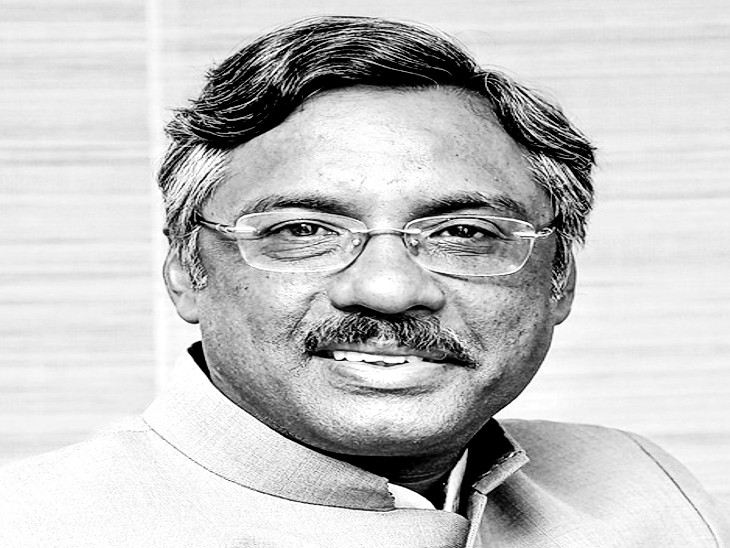
Pawan K. Verma, former Rajya Sabha MP and diplomat
On April 18, the Prime Minister had given ‘Address to the Nation’. He has every right to do so, because he is the head of the government. But he is also the Prime Minister of the entire country. His position is not partisan; Is constitutional. Therefore the address to the nation is expected to follow an unwritten but expected principle.
That principle is that such an address should be beyond the context of party politics. He should address the citizens as citizens and not as voters. At the same time, it should present solutions to problems and clarify perspectives.
Traditionally, such addresses have been given only at moments of national importance: wars, economic crises, pandemics, natural disasters or important policy announcements. When Pt. Jawaharlal Nehru addressed the nation on the eve of independence, there was a poignant expression of a civilizational transition in his address. When Indira Gandhi addressed the nation during the 1971 war, it was to stabilize the country during that period of conflict.
In recent years, speeches by Manmohan Singh during the global financial crisis or Narendra Modi at the beginning of the COVID-19 pandemic were also broadcast with the aim of informing, reassuring and uniting people. But when the address to the nation is used to criticize the opposition, it raises questions about common decency as well as the proprieties of constitutional morality.
As such, legally, there is no specific law determining the content of the address to the nation. The Constitution is also silent on this subject. But democracy is governed by laws as well as traditions and these are the essential decorum that keep institutional integrity intact.
The Prime Minister of India is undoubtedly also a politician. They lead a party, contest elections and engage in rival politics to the best of their ability. But when he addresses the nation, his role changes. If this does not happen, there is a risk of blurring the line between state power and political party, government and the ruling system.
This is not a minor difference; This goes to the very essence of democratic fairness. The broadcast media used for such addresses are also public resources – be it Doordarshan or All India Radio. They are operated with taxpayers’ money and are meant to serve the entire nation impartially.
Also, this address was given at a time when the Model Code of Conduct was in force on the eve of elections in states like West Bengal or Tamil Nadu. It is monitored by the Election Commission. This Code is designed to ensure level playing field during elections. It prohibits undesirable use of official machinery, public funds and government forums.
The Election Commission is capable enough to curb such violations. He can issue advisories, seek clarifications and, when necessary, even condemn activities that undermine the principle of equal opportunity. More importantly, it can set guidelines for the future so that such tendencies can be discouraged.
Such norms include making a clear distinction between official addresses and political speeches; This could include restrictions on partisan content in national broadcasts and safeguards during election periods to ensure that public broadcasting platforms are not used for political gain. These are not restrictions on freedom of expression, but efforts to protect democratic fairness.
In fact, the Prime Minister’s Office itself may take the initiative to lay down the code of conduct for national addresses in consultation with the Election Commission and other political parties. This will only enhance the dignity of this office.
When the Prime Minister addresses the nation, he is on a platform that is above politics. Then their words are expected to reflect inclusion, restraint and responsibility. Even in a competitive democracy, there are some moments which are for the entire nation. The address to the nation is also one such moment.
- There is no law determining the content of the address to the nation. The Constitution is also silent on this subject. But our democracy is governed not only by laws but also by traditions which set limits.
(These are the author’s own views)