- hindi news
- opinion
- N Raghuraman Column: Art Needs Rich Support & Educated Encouragement
20 hours ago
- copy link
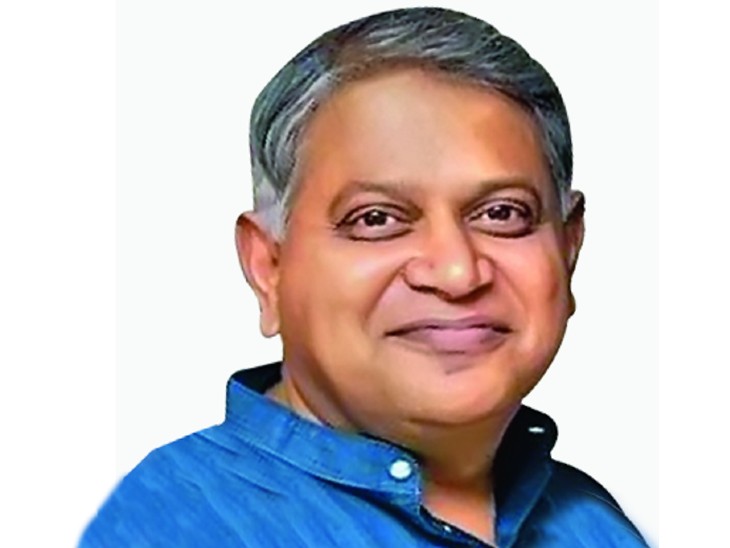
N. Raghuraman, Management Guru
Due to completion of IPL, after a long time on some Sunday evening I felt that I had nothing to do. The family suddenly decided to go to the Neeta Mukesh Ambani Cultural Center (NMACC) in Bandra, Mumbai. There we went to watch the traditional Bharatnatyam dance show ‘Echoes of Thanjavur – The Unbroken’.
In the small but completely filled Experimental Theater with 125 seats, my eyes fell on a familiar face. My so-called intelligence immediately activated, raising the question ‘How did this happen here?’ They have no connection with this programme. I estimated his age to be about half the total seating capacity of this small auditorium. Yet, they were completely engrossed in the classical dance art that is the heritage of Thanjavur district. I also come from this place.
At that very moment my mind gave me the topic of Monday’s article. Brain instructed to interview him as soon as the show was over. My planned and curious first question was going to be ‘How are you here?’ Then I realized how foolish it would have been to ask such a question to a senior person.
He was 73-year-old Anang Desai, best known for playing the irascible but beloved family patriarch ‘Babuji’ (Tulsidas Parekh) in the cult-classic sitcom ‘Khichdi’. Desai, who has a career spanning over 100 TV shows and 70 films, was brought up in Ahmedabad.
His father was a cardiologist and mother a singer and painter. Having honed his craft at the National School of Drama and the Film and Television Institute of India, his artistic understanding is extremely deep. When talked to, he smiled and said, ‘Art is art.’ I love art in all forms.
They couldn’t be more right. The performance we saw originated from the Thanjavur Quartet. Performed by Priya Murale, Lekha Prasad and Sneha Mahesh Vishal, this dance art developed in the court of Serfoji-II (1777–1832). Serfoji II was a visionary Maratha ruler of Thanjavur, during whose reign there was a widespread cultural, educational and scientific renaissance.
His court brought together excellent musicians, composers and nattuvannars who played the manjire and guided the dancers through rhythmic lyrics. The beauty of the program came in many unexpected forms. Priya did not dance with her feet, but told the entire story with her eye expressions.
Beautifully brought to life the selfless friendship and divinity of Lord Krishna and Kuchela (Sudama). I went to him and said, ‘Wow, today I realized that one can tell the whole story just through the eyes.’ This is called ‘Abhinayam’ in the language of Bharatnatyam. While Lekha and Sneha performed ‘Keeratnam’ in praise of Lord Shiva and embodied their intricate, cosmic postures with amazing beauty.
That evening I realized how valuable it is to give such heritage art forms a mainstream platform, where sound, lighting and stage design are of global standards in a world class theatre. This is definitely worth considering. After the 90 minute program, my heart was filled with gratitude for the two classes.
First, the affluent people who created such a space and opened it up to emerging talent, so that culture could flourish. Secondly, the intelligent audience who filled every seat, understood the art and clapped at the right time. This made the artists feel that they were performing in front of an audience who understood the intricacies of the art very well. Anang Desai was a shining example of this second category.
The bottom line is that Art has a universal language, which transcends every linguistic boundary. If our rich heritage from Kashmir to Kanyakumari is to be truly preserved, the rich will have to provide financial support and provide places where culture can flourish and the educated people will have to provide intellectual appreciation to keep it alive.