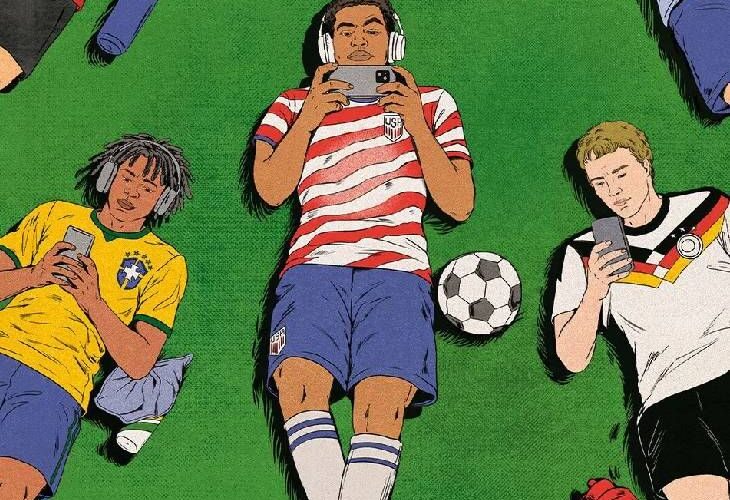
The official anthem of the Football World Cup opening ceremony on June 11, presented in English, French, Spanish and Italian, delivered a message of global unity. Nearly half the world’s population will watch the tournament in the coming weeks. At first glance, it may seem that the world of entertainment has become more global than ever before and that America’s cultural power still remains at its center, but the reality is different. Mega events like the World Cup and the Olympics still attract the entire world’s attention, but the broader world of entertainment is becoming increasingly local. In areas like music, television, social media and gaming, people are increasingly giving preference to content from their own countries and languages. The influence of American content has not completely ended, but its monopoly is weakening. Global platforms like Spotify, Netflix, YouTube, Apple and Google’s App Store have given people around the world access to the same content. This brought unprecedented global recognition to American brands and stars like Taylor Swift, Mr. Beast and Roblox. Despite this, local preferences are becoming stronger. In football, people wait for the World Cup, but most of the time they watch their domestic leagues and local teams. YouTube provides content from almost every country, yet most of its viewers watch videos related to their country’s language and culture. The same trend is visible in gaming also. Console and PC gaming is dominated by a few global franchises, but mobile gaming has become much more diverse. In the world’s five largest gaming markets, there is not a single app that is included in the top-10 of every country. Experts believe that the global landscape of soft power is changing rapidly. America’s nearly century-old dominance over popular culture has weakened. Its influence on distribution platforms remains, but countries like Brazil, South Korea and China are now emerging rapidly in content creation. The world will have its eyes on the World Cup final to be held in America next month, but many new players have now entered the field in the new game of cultural influence. Local singers are dominating music streaming – The most streamed music tracks in Denmark in 2025 remained local. Locals also dominate in Norway and Sweden. Last year, Spotify’s 50 global top songs included songs from 16 languages. – In Brazil, the top 100 artists on YouTube Music in the first week of June were Brazilian. – Last year in Thailand, all ten popular songs were local. In Indonesia and Philippines this number stood at eight each. – Nigeria’s top ten songs and South Africa’s nine were local. – Hindi music’s share in music streaming in India is decreasing. Now people are listening to more songs in many other local languages including Malayalam and Oriya. Music charts are becoming more local. Music charts are now becoming local. Of the 100 most streamed artists in Brazil last week, 96 were local. Video streaming services like Netflix and Amazon are producing more shows overseas. In the last six years, North America’s share of new streaming commissions has fallen from 70% to 36%. Now more TV shows are being made in local languages. In the last two years, Sony Music has opened offices in Greece, Czech Republic and Dubai. Warner Bros. has launched local shows in Italy, Germany and Turkey. In the first quarter of this year, 36% of shows on global streaming platforms were North American. For the first time, Netflix has created more TV shows in local languages. Carrom is the most popular game in India. Not a single game is included in the top-10 in the five biggest gaming markets, America, China, Japan, Britain and South Korea. There were 34 different titles in his top-10. Carrom is the most popular among the top-10 games in India. 95% of YouTube’s content in India is in Indian languages. More than half of the content is in other languages instead of Hindi.
Source link
American dominance in music, films and TV shows is decreasing: Local languages are becoming stronger around the world on platforms like Spotify, Netflix and YouTube.