- hindi news
- Opinion
- AI Will Reinvent Core Engineering, Not Replace It: N. Raghuraman Column
21 hours ago
- copy link
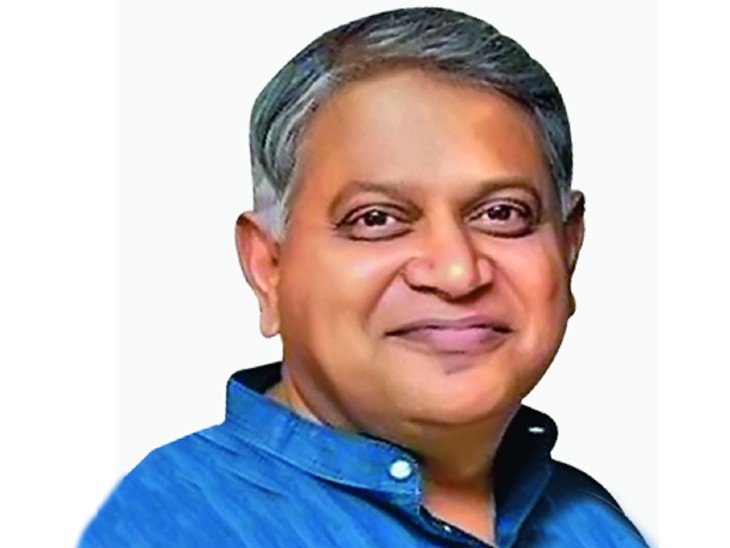
N. Raghuraman, Management Guru
I read two news on Friday. Most universities in the US are starting AI programs at such a rapid pace that it is becoming difficult for researchers to track them. The idea behind this is that as AI is changing the global economy, it is important to keep both colleges and students competitive. Here, in a news from Telangana, it was said that due to uncertainty in the IT job market and decreasing opportunities for freshers, the traditional engineering branch is becoming popular again.
Citing the seat allotment issued by the Technical Education Department in the news, it was said that at least 80% seats of civil, mechanical and related branches have been allotted. 82% seats are also expected to be filled in non-IT courses like Chemical Engineering, Agricultural Engineering and Food Technology.
These two aspects of a college education prompted me to talk to some experts. Citing history, he said that ‘once upon a time industries used to proudly call themselves ‘computerised’. Later everything became computerized and this adjective disappeared. Same thing happened with the internet. “Today, no company claims to be ‘Internet-enabled’ because digital connectivity has become natural.”
He said that ‘AI is also moving in the same direction. Colleges probably won’t be marketing themselves as ‘AI-enabled mechanical engineering’ or ‘AI-enabled civil engineering’ in the coming decade. Like mathematics, physics and computer literacy, AI will also become a basic tool. It would be expected from every engineer, irrespective of the branch, that he would know how to work with intelligent systems.
The experts are right. Around 60 thousand graduates pass out from CSE and related branches every year from Telangana, while entry-level IT jobs are decreasing. Students feel that there is less competition in core branches and more scope for better performance academically. Also, opportunities are available in both private and government sectors. But they should understand that in the future AI will not just be a chatbot that writes code or answers questions.
At its core, AI is technology that analyzes data, recognizes patterns, predicts outcomes, and helps make better decisions faster. Every engineering branch generates such data. The data which takes us two weeks to analyze, AI does it in a few minutes.
A civil engineer works to monitor structural stresses, construction quality, and infrastructure. By analyzing images taken from drones, AI can identify cracks in bridges before they become dangerous. The same change is visible in mechanical engineering also. Modern factories are relying on AI to detect machine faults before they occur.
In such a situation, engineers who understand both machines and intelligent software will become very important. The same trend is also visible in electrical engineering. Smart grids are using AI to predict electricity demand, balance renewable energy sources, and detect faults in real-time.
Precision farming is on the rise in the agriculture sector, where AI analyzes satellite images, weather forecasts and soil conditions to make suggestions about irrigation and fertilizer use. Chemical engineers are using AI to create new materials, optimize manufacturing processes, and reduce waste.
None of these changes eliminate the need for engineers. On the contrary, they further increase the value of engineers who have digital skills along with expertise in their field. This suggests that the move towards core engineering should not be mistaken for a retreat from technology. The future belongs not only to software engineers and not just to traditional engineers, but also to the new generation of professionals who can use AI to create a smarter, safer and more efficient physical world.
The bottom line is that AI is not a passing trend, nor is core engineering making a nostalgic comeback. These two can no longer live apart. In the coming decades, engineering education will not revolve around the choice between machines and algorithms, but rather on mastering both.