- hindi news
- opinion
- Javed Akhtar, Turn Your Skills Into Craft, Not A Formula For Success
Javed Akhtar (famous lyricist and writer). Mumbai4 hours ago
- copy link
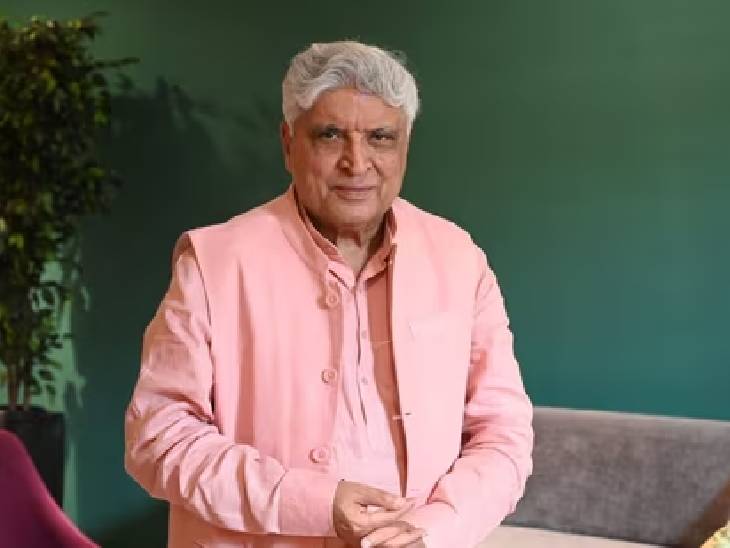
Javed says- Hard work, patience and self-discipline are required to convert talent into achievement. – file photo
There is no single formula for success. If there was such a formula, then perhaps there would be no such thing as failure in the world. Still, there are some things which are visible in some form or the other in the life of almost every successful person. In my experience, three things are very important for success – talent, discipline and self-respect. A deficiency in any one of these three can prevent a person from reaching his full potential.
First of all let’s talk about talent. Talent is an asset which we get at birth. Some are born magicians of words, some with an understanding of music, some with natural talent for maths and some with the amazing ability to read people’s minds. But talent in itself is not a guarantee of success. Talent gives initial advantage, but only those who convert their skills into craft survive. The world is full of people who had incredible talent, but their achievements fell far short of their capabilities.
No matter how good the seed is, if it does not get the right soil, water and care, it cannot become a tree. Similarly, converting talent into achievement requires hard work, patience and self-discipline. But here I have to admit a truth about myself. When people talk about success and discipline, they often assume that a successful person would wake up at a fixed time every day, do all the work on time and would never procrastinate. But in my case this picture is not completely correct. I am one of those people who often postpone work till the last moment.
Suppose someone said that a song has to be delivered by 5th. Immediately a voice comes from within me – Hey, there are still two dates left. There is still a lot of time. Then two dates turn into three, three into four, and within no time the fifth date appears in front of you. Then suddenly a strange change occurs. The work which could not be started for many days starts progressing in a few hours. The brain starts working faster. Thoughts start coming. Words start coming together. As if there was a machine somewhere inside, which was lying closed till now and suddenly started running at full speed.
Many times I feel that the source of my inspiration is more fear and nervousness than excitement and enthusiasm. I wait less for the mood to develop and more for the pressure of deadlines. This may sound strange, but it happens to many creative people.
Actually, deadlines have a psychology of their own. When there is a lot of time, our mind starts believing that the work can be done at any time. But as the time comes closer, an uneasiness arises within us. This restlessness turns into energy. This energy pushes us towards work. I call it the terror of deadlines. This terror is not harmful. It is not fear that should bind us. It is this fear that wakes us up. This reminds us that there is no longer any room for procrastination. Now it has to be done.
I remember, I kept postponing a song like ‘Tumko Dekha To Ye Khayal Aaya’ for many days. I had to write a song, but I kept leaving it for tomorrow. Then the time came when the deadline was looming. Then I sat down and started writing it and the surprising thing is that the entire song was written in just nine minutes. This made me once again realize that many times we keep waiting for inspiration, whereas the real need is to sit down to work. Once you start working, the words often make their own way.
Interestingly, with increasing age, this habit often becomes stronger instead of improving. I wouldn’t say this is a better way to do things. Maybe this is my weakness. But the truth is also that this very working style has given me the ability to work beyond my limits many times. That’s why I consider it both my weakness and strength.
But the success story does not end with talent and discipline alone. There is a third thing, without which the meaning of success remains incomplete. That is self-respect, self-respect. People often mistake this for arrogance and pride, whereas there is a lot of difference between the two. Ego wants to prove you are greater than others, whereas self-respect makes you realize your inner dignity. This does not mean that you should consider yourself the biggest, the best. It just means that you recognize your value and do not compromise with your dignity and principles.
Such situations arise again and again in life, when a person has to choose between comfort and respect. One way is easy. For that, a little compromise has to be made, one has to bow one’s head a little and one has to keep aside some of one’s principles. In return one gets benefits, gets opportunities and the path of progress seems to be opening, sometimes even success is achieved. But the question is, what is the price of that success?
Everyone has to set an invisible Lakshman-Rekha in his life. She decides under which circumstances he can bow down and under which he cannot. This line is not drawn on any paper or ground, but within the mind and conscience. You must have the courage to say that I can go this far, but not beyond that. Therefore, self-respect is not just an emotion, but also a declaration of one’s importance and one’s limits in front of the world. But this also does not mean stubbornness; It is very important to understand this.
Talent gives you the strength to start. Discipline keeps you on track. But self-respect keeps reminding you how much you have preserved your inner person in the race to reach your destination. I have seen in my life that the biggest investment of a creator is his mind and his imagination. A lyricist or writer writes his composition, but many times he does not have any share in the profits from that composition. It always felt wrong to me.
When I started raising the issue of the rights of lyricists and writers, many people said that this fight is difficult, the system has been running like this. Some people advised that I should mind my own business. But for me it was not just about money. It was a matter of self-respect. I believed that if writers and musicians lay the foundation of a building, then they should also have the right to have their work recognized wherever their work is used.
I raised my voice on this issue for years, went to meetings, held debates, tried to convince people. When the Copyright Act finally changed and the rights of writers and songwriters became more recognized, I was happy not because there was any personal victory. The satisfaction was that the dignity of the creator was accepted to some extent. For me it was always a battle of self-respect, and the battle of self-respect is never small.
(Editing and coordination- Arvind Mandloi)