- hindi news
- opinion
- Vijaydutt Shridhar’s Column: Hindi Journalism Has Created A Rich Reader Culture
23 hours ago
- copy link
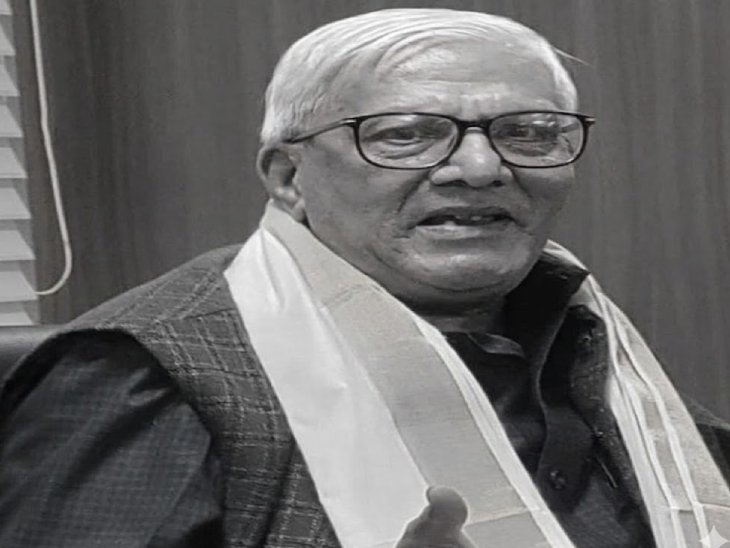
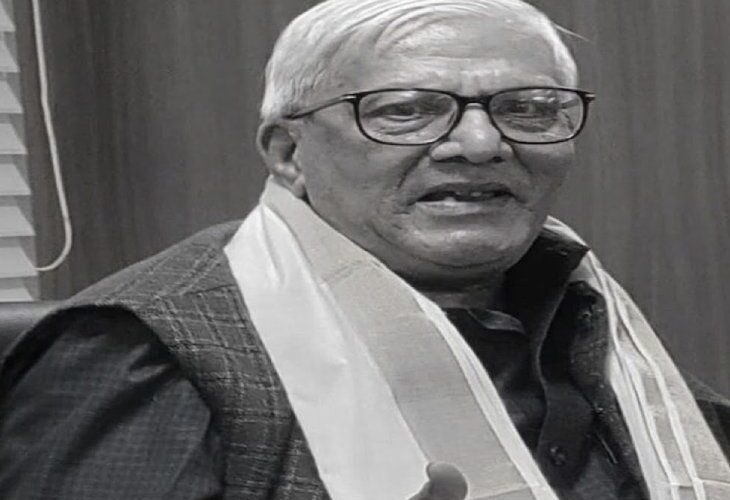
Vijaydutt Sridhar Padmashree awarded senior journalist and research director
‘For the welfare of Indians’: This is the original promise of Hindi journalism. With this resolution, the first Hindi newspaper ‘Udant Martand’ was published on 30 May 1826. Yugalkishore Shukla has the honor of being the first editor of Hindi. Till January 1931, it was believed that Hindi journalism started with ‘Banaras Akhbar’ published from Kashi in 1845.
But when Brajendranath Bandyopadhyay, assistant editor of ‘Modern Review’, was writing the history of journalism in Indian languages, the file of “Udant Martand” came in his research vision. Then the fact came to light that the first Hindi newspaper is “Udant Martand”.
Brajendranath Bandyopadhyay’s research articles were published in the four issues of ‘Vishal Bharat’ in 1931, in February, March, April and May. Accordingly, the issue of ‘Udant Martand’ was published on 30 May 1826. On the front page of this newspaper of eight pages of 30×20 cm foolscape size, the name ‘Udant Martand’ was at the top in big letters.
Below this, it was written in Sanskrit – Divakant kanti binadhvantamantam nachapnoti tadvajjagatyagya lokah. News सेमावर्ती ज्ञात्वमाप्तुं नशक्नोति तस्मातकरोमीती यतन्म. Its meaning is that just as darkness does not disappear without sunlight, in the same way ignorant people cannot become knowledgeable without news service. That’s why I am trying to publish this newspaper. That is, “Udant Martand” means news-sun.
In the entry issue, the purpose of the newspaper is given under the title ‘Advertisement of the publisher of this paper’ – “This ‘Udant Martand’ is now first published for the benefit of Indians, which no one has ever published but the news paper which is published in English or Parsi or Bengali, has the pleasure of knowing and reading those dialects only and everyone is happy with other people’s happiness like someone else’s wealth being rich or someone else’s eyes living in their own. You see, it is difficult for someone who has not penetrated into that quality to taste its essence.
All the quotes from the news published in “Udant Martand” show that the editor had the knowledge about what events, trends and news it is necessary to inform the readers about. The first duty of journalism is to inform. The second duty is to educate and inspire the society. It is a virtuous expectation that journalism should also work in the direction of public entertainment.
“The interest of India and Indians had an important place in the thought-view of ‘Udant Martand’. In the issue of 7th September 1826, there is a comment titled ‘Villayati Kapada’ – “How the income of foreign clothes in this country increased year by year, can be understood only by looking at the details written below.’
While giving the details of nine years, the editor raised the question – “Just think, where is the cloth of Rs 1.5 lakh per year and where is the cloth of sixty crore rupees per year! An increase of Rs 4,00,00,00/- per hundred in 115 years!” The publication of “Udant Martand” stopped on 4 December 1827. One reason for this was that “Udant Martand” did not get the help that newspapers in other languages got from the Company Government. The facility of distribution of newspapers was also not available from the post office.
The Hindi-speaking people for whose benefit Yugalkishore Shukla had published the newspaper also did not support him. “Udant Martand” laid the solid foundation of Hindi journalism. There has been unprecedented expansion and development of Hindi journalism in the last two hundred years. Hindi journalism has done two big things. One, it created a readership interested in the situation and movements of the country and the world. Secondly, it gave a new shape to the language and developed the tradition of clean, clear and capable prose.
It is a matter of pride for Hindi journalism that non-Hindi speaking scholars also contribute among its prominent editors. Marathi’s Madhavrao Sapre, Baburao Vishnu Paradkar, Laxman Narayan Garde; Raja Rammohan Roy of Bengali, Keshavchandra Sen, Amritlal Chakraborty, Swami Dayanand Saraswati of Gujarati, Mahatma Gandhi, Narayan Dutt of Kannada, Balashayari Reddy of Telugu are a long series of enlightened sages.
Bhartendu is considered the pioneer of Hindi renaissance. The editors of ‘Aaj’ (1920, Kashi) have played an important role in enriching the vocabulary of Hindi. ‘Saraswati’ editor Mahavir Prasad Dwivedi worked hard for uniformity in the layout and spelling of Hindi prose. Ganesh Shankar Vidyarthi’s ‘Prataap’ and Makhanlal Chaturvedi’s ‘Karmaveer’ are also the pride of Hindi journalism.
- “Udant Martand” laid the solid foundation of Hindi journalism. In the last two hundred years, Hindi journalism has done two big things. First, it created a readership interested in the happenings of the country and the world. Second, it developed the tradition of clean, clear and capable prose.
(These are the author’s own views)