The word ’emergency’ in itself creates a feeling of deep uneasiness. During this time, previously established norms and procedures are often suspended to achieve some perceived larger objective. In every period of history, humanity has faced some kind of emergency. Yet, no other emergency has had as profound an impact on the national consciousness of India as a democratic nation as the politically motivated ‘National Emergency’ of 1975. This was such a dark chapter of history, which is still remembered as a warning to protect democratic institutions. Today the entire nation is celebrating ‘Constitution Murder Day’. The imposition of emergency in the country remains an indelible stain on our democratic history. 51 years have passed since this dark and painful period of history, but that time of Emergency still disturbs the minds of the people of India. But it also resolves the citizens of India to remain vigilant sentinels of the democratic system. By imposing Emergency in 1975, the Indira Gandhi government disregarded the constitutional spirit and seriously damaged the fabric of moral governance in the country. The irregularities in the 1971 Lok Sabha elections, the subsequent decision of the Allahabad High Court and the increasing public pressure on Indira Gandhi to step down from power were not the reasons for creating any ‘internal disturbance’ for India. The events preceding the imposition of Emergency clearly reflect the anti-democratic mindset of India Gandhi. She was the first Indian Prime Minister to appear before the court and testify on 19 March 1975 in an election-related case pending before the Allahabad High Court. The final judgment delivered by the Allahabad High Court on 12 June 1975 had far-reaching consequences. By this decision, Mrs. Gandhi’s election was declared invalid and she was disqualified from holding any elected post for 6 years. After this, on June 24, the Supreme Court, while hearing his appeal, put a conditional stay on the decision of the Allahabad High Court. This allowed him to attend Parliament, but he was deprived of the right to vote or receive a salary until the case was decided by a higher bench. Meanwhile, the huge public meeting held at Ramlila Maidan in Delhi under the leadership of Jayaprakash Narayan further increased the public pressure and the demand for his resignation was echoed in political circles. To save her chair, Indira Gandhi decided to impose emergency in the country under Article 352 of the Constitution. At midnight on 25 June, he advised President Fakhruddin Ali Ahmed to declare a state of emergency without the prior consent of the Cabinet. This information was given on plain paper instead of government letterhead. Remembering the wounds of the past, the government, through a gazette notification issued on July 11, 2024, declared June 25 to be observed as ‘Constitution Killing Day’. It is a day to remember and honor the contributions of all those who opposed the Emergency and stood firm to protect democracy. This day also reminds us of the importance of protecting the values enshrined in the Constitution.
Source link
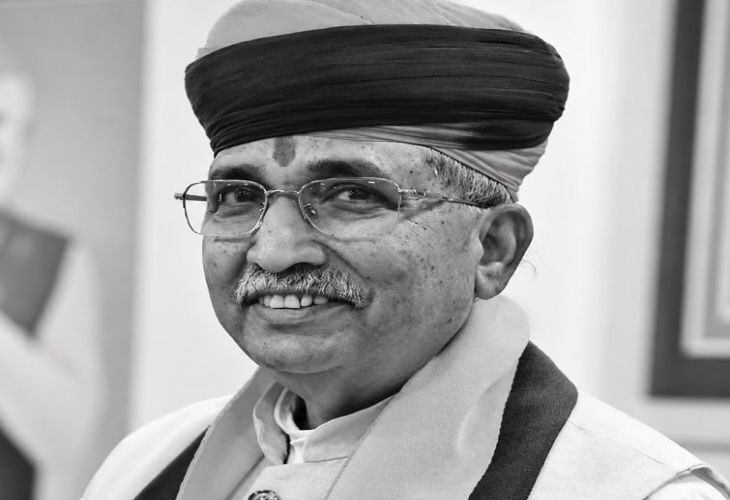
Arjun Ram Meghwal’s column: Today is a day to remind us of the values enshrined in the Constitution.