- hindi news
- opinion
- Aarti Jerath’s Column: Presenting A Positive Image Of The Country To The World Is Also Our Duty
17 hours ago
- copy link

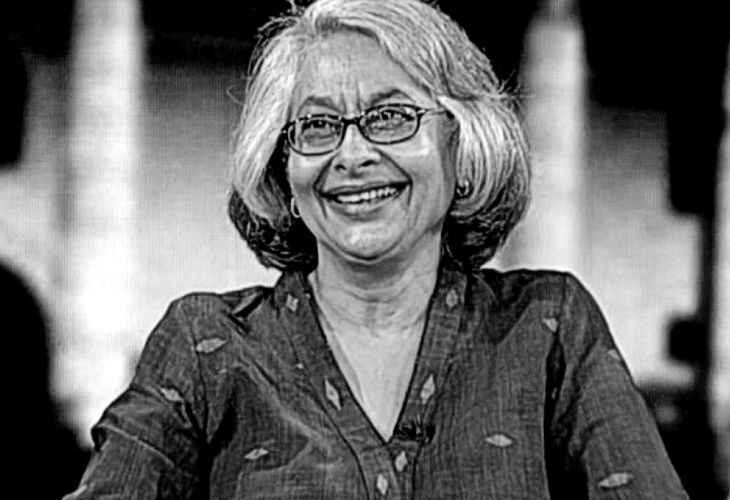
Aarti Jerath Political Commentator
Search for Indian tourists on any social media platform and you will come across many videos of their behaviour, or should we say misbehaviour, while traveling abroad. A group wearing festive attire is performing Garba on the Great Wall of China.
The second one is dancing to Shahrukh Khan’s song ‘Chaiyya Chaiyya’ on the famous Train Street of Hanoi in Vietnam. A group is dancing on the road near the runway in an airport in Vietnam, due to which the security staff there seems upset. While another is raising slogans of ‘India, India’ while doing a boat safari at Iguazu Falls, located on the border of Argentina and Brazil.
Earlier, the same people had also pushed and pushed while trying to break the queue while boarding the boat. You will see many such examples till Paris, London, Bangkok, Bali. There would be very few such international tourist destinations left where Indian tourists have not disrupted the system. There was a time when American tourists were called ‘The Ugly Americans’ because of their rude attitude in foreign countries.
It seems Indians are also going to get the same label as many of them are being found ignoring local sentiments. It would not be correct to say that all Indian tourists misbehave. In fact, the displeasure seen on social media regarding violation of travel etiquette is mostly expressed by Indians. Because they fear that the spoiled attitude of a handful of people not only spoils India’s image abroad but also spoils the environment for themselves.
But despite their concerns, stories continue to emerge about Indian tourists bargaining aggressively over prices, speaking rudely to waiters and shopkeepers and even stealing things like soap and towels from hotels. Recently, industrialist Harsh Goenka, while mentioning such a shameful incident that happened to him on ‘X’, wrote that what kind of embarrassment ‘Brand India’ has to face due to such behaviour.
He told that he was surprised to see a list of special rules for Indian tourists in a hotel in Switzerland’s tourist destination Gstaad. Notices posted in every hotel room warned Indians not to take out food from the free breakfast buffet. Use only the cutlery provided and avoid making noise in the balconies and corridors.
He told another incident that an Indian businessman went to the World Economic Forum meeting in Davos some year and started playing Punjabi music in the restaurant so loudly that the whole city could hear it. They were calling it a demonstration of India’s ‘soft power’. The real thing is that the lack of civic sense that we display while living in the country is now visible abroad too.
Every day we see children being allowed to run around on airplanes and in restaurants. Parents remain oblivious of the problems being faced by others. People throw chocolate wrappers and empty packets of chips on the road. On Monday, go to a public park where families picnicked on Sunday. Paper plates, glasses and even utensils are scattered everywhere, whereas there are regular dustbins installed there. In many countries, especially developed countries, basic civic sense is taught in schools and followed at home.
But it seems perhaps we have forgotten the importance of becoming good citizens. Thailand has changed its visa policy to screen out unwanted tourists. It has ended visa-free entry for 93 countries and India is also among them, although most of the tourists from India go to Thailand. Today the global presence of Indians has increased. But it also means that our tourists are more monitored. In such a situation, it is our duty to present a better image of ourselves and our country. After all, tourists, like diplomats, are representatives of India.
- Today the global presence of Indians has increased. It also means that our tourists are more monitored. In such a situation, it is our duty to present a better image of the country. Tourists are also representatives of India like diplomats.
(These are the author’s own views)