- hindi news
- opinion
- Shashi Tharoor’s Column: One Can Become Self Reliant Not By Cutting Oneself Off, But By Connecting
10 hours ago
- copy link
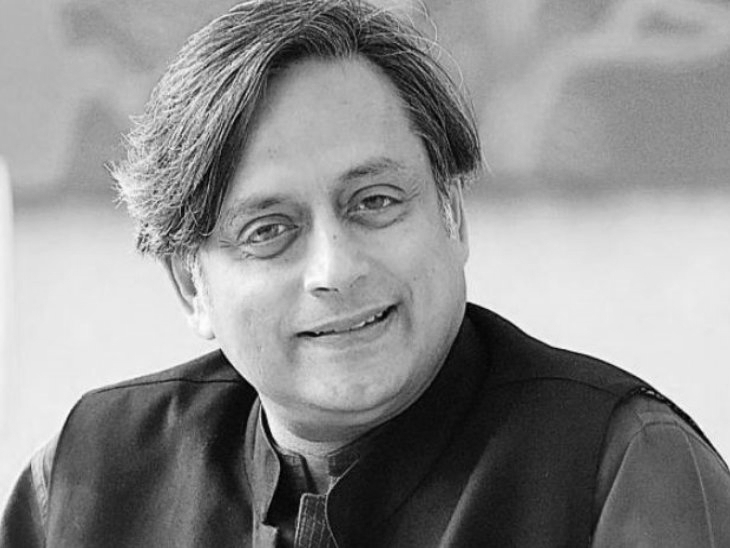
Shashi Tharoor former Union Minister and MP
Earlier the Indian market used to be closed and isolated, but now it is becoming the harbinger of global trade. This transformation of the Indian market is perhaps the most significant structural change in the world economy of the 21st century.
The country has shifted from a closed, defensive economic stance to an increasingly aggressive, globally watchful stance on the outside world. What was once a reluctant participant in globalization has now become a confident force shaping global supply chains. For decades, the Indian market was defined by the license-permit-quota raj.
It was a suffocating system of bureaucratic entanglements and heavy tariffs, designed to protect domestic industries from alleged exploitation by foreign capital. For much of the post-independence period, India’s economic strategy was based on self-reliance, import substitution (domestic production of goods that could be purchased from others), and a deep suspicion of global markets.
While this approach did develop some isolated pockets of industrial capacity, it ultimately led to long-term inefficiencies, technological stagnation, and an ever-widening gap between India’s economic potential and its performance. Economist Raj Krishna had even called it ‘Hindu growth rate’.
Our economy continued to struggle to keep pace with demographic growth and growing needs. The liberalization of 1991 marked the beginning of the transformation. India moved from shielding itself from the global economy to actively participating and competing in it.
As much as this change was economically important, it also had psychological significance. To embrace the possibilities of openness, India had to give up its worries and insecurities. Over time, integration into global trade, capital flows, and technology networks reshaped the pace of development, urbanization patterns, and entrepreneurial culture.
But the story does not end here. The India of 2026 has broken its shackles and become the world’s most open and liberalized emerging economy. This transformation arose from a fundamental insight: that true economic sovereignty in a digitalized world comes not from isolation, but from connection. While the initial reforms of 1991 began to open doors, India has completely removed the barriers over the years.
India is no longer a marginal player, but central to global economic flows. Services exports, digital capabilities and manufacturing ambitions have established us as a country whose economic choices resonate far beyond our borders. Within multilateral fora, India has signed landmark comprehensive economic partnership agreements with the UAE, Oman, Australia, the UK and the EU. Additionally, both New Zealand and the US have announced agreements in principle.
Underlying this change is also a subtle reinterpretation of the Government of India’s mantra of ‘self-reliance’. India’s leaders now understand that self-reliance can also be achieved through global engagement, not through isolation from others. India is no longer afraid of foreign capital and is eagerly competing as a major alternative to the traditional manufacturing clusters of East Asia.
Thus, India’s openness has now acquired a strategic importance. What once seemed a domestic reform agenda has now become a global opportunity. The synergy between emerging digital public infrastructure and new trade agreements points to a future where India will export not just goods but also digital architecture to the world.
The combination of a large, stable democracy, a young workforce, improving infrastructure and a regulatory environment that is moving toward greater transparency makes India not just an alternative to China, but also an important hub in a multipolar supply-chain architecture.
- From opposition to foreign capital to attracting it; From domestic inefficiencies to global competitiveness – the direction of our journey is clear. India is no longer a silent spectator in the global system but is also the main creator of its own future.
(@ProjectSyndicate)