- hindi news
- opinion
- Judge Political View Not Right | Arghya Sengupta & Swapnil Tripathi Column
20 hours ago
- copy link
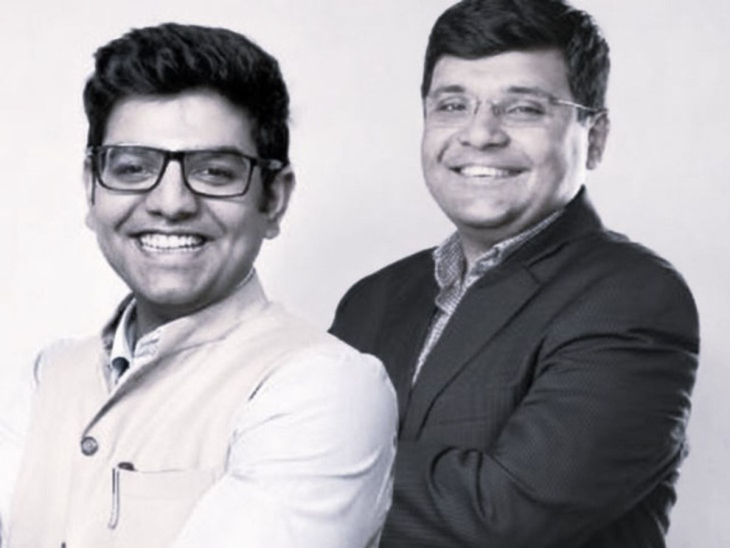
Arghya Sengupta and Swapnil Tripathi Officers at Vidhi Center for Legal Policy
Earlier this year, the trial court acquitted former Delhi Chief Minister Arvind Kejriwal in the liquor policy case on the grounds that prima facie no case was made out against him. CBI challenged this decision in Delhi High Court.
The case took an unexpected turn during the hearing when Kejriwal filed an application demanding that Justice Swarn Kanta Sharma, who was hearing the case, recuse herself from the case as she feared bias. Although the application was rejected, the incident brings to the fore a familiar question – when should a judge recuse from hearing a case?
The law of recusal in India is relatively clear, although its application is often debated. Its basic test is whether an apprehension of bias would arise in the mind of a normal, sensible person. This is not a light standard. The courts have consistently held that such apprehension must be based on concrete facts, and not merely vague suspicions or political disagreements.
Some limited and clear grounds have evolved over time—such as economic interest, prior involvement in the same case, or a close personal relationship with a party. Beyond these, especially in allegations of ideological or institutional bias, the bar is quite high. It has often been seen that judges of high courts recuse themselves from hearing politically sensitive cases.
In several cases involving Rahul Gandhi in Gujarat and Allahabad High Courts, judges have recused themselves without assigning any reason. Many times this was also considered as the judge’s abdication from his responsibilities. But in Kejriwal’s case the situation was opposite. Here the judge was ready to hear, but the parties had objections.
Several grounds were presented in the recusal application – such as earlier orders given by the judge, some technical objections and the inclusion of the judge’s family members on government panels. The court rejected these arguments on the grounds that they did not establish a suspicion of bias.
This decision of the court was appropriate – in any judicial decision, one party will be satisfied and the other dissatisfied. The losing party cannot decide not to appear before the same judge. The same applies to the professional life of the judge’s family members.
The most controversial argument was related to ideological proximity. It was stated that Justice Sharma has participated in events organized by the Advocates Council, an organization whose ideological line is contrary to that of the petitioner and his political party. The constitutional tradition in India has never considered mere ideological or political affiliation as a ground of recusal.
The example of Justice VR Krishna Iyer is important in this context. Before his appointment to the Supreme Court, he was associated with the Communist Party and was also the Law Minister in the Government of Kerala. At that time it was feared that his ideology might influence his decisions.
But his tenure proved that prior ideological affiliation does not in itself translate into judicial bias. He gave many progressive judgments on the rights of deprived sections like labourers, prisoners, women and children. This further strengthens the principle that after becoming a judge, the judge is bound by the law.
The same principle also applies to allegations that are made on the basis of participation in public forums. Merely because a judge has attended an event of a particular organization – which is not unusual in the judicial community – there cannot be a reasonable suspicion of bias.
This requires showing that there is a clear and direct connection between that involvement and the matter in question. If common ideological affiliation becomes the basis of recusal, then constitutional decisions will become impossible. This incident also reflects the growing tendency to view the judiciary from a political perspective.
The struggle over political issues should take place in the streets and Parliament, not in the courts. The parties should understand that repeated demands for recusal affect the justice system. At the same time, judges will also have to be responsible for their words and conduct. (These are the authors’ own views)