- hindi news
- Opinion
- UP Politics: Past Heroes Dominate Current Election Strategy | Badrinarayan Column
20 hours ago
- copy link
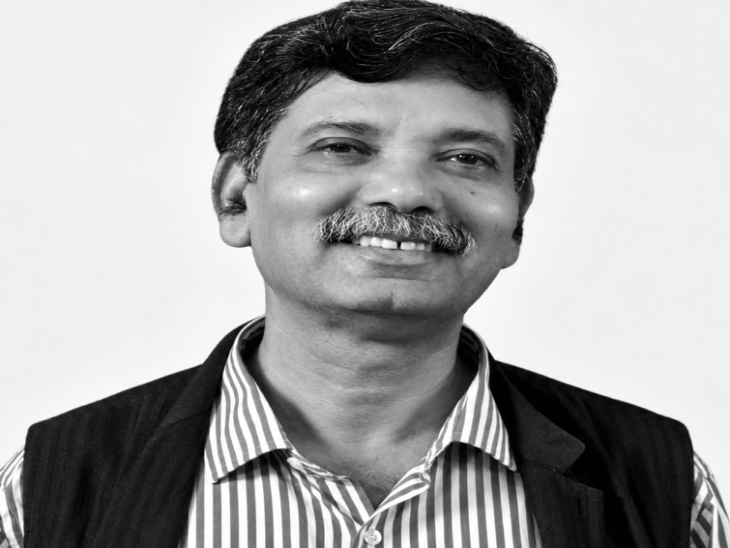
Badri Narayan, Vice Chancellor of Tata Institute of Social Sciences
Indian politics has come to such a turning point where the past is waging a war in the political Kurukshetra of the present. The army of past and memories is ready and the heroes of history seem to be alive again, riding on horses, fighting for their respective sides. This phenomenon can be clearly seen on the political scene of Uttar Pradesh.
The political atmosphere for the upcoming assembly elections has started forming in Uttar Pradesh. All the rival political parties are busy making election strategies. Recently, Congress leader Rahul Gandhi unveiled the statue of Veera Pasi, the Dalit hero of the 1857 war – also known as India’s first war of independence – in Rae Bareli and on that occasion tried to politically connect the Dalit and marginalized communities.
At the same time, AIMIM leader Asaduddin Owaisi also tried to use the memory of Ghazi Mian for awakening the identity of the Muslim community by describing the bravery and greatness of Ghazi Mian in his first rally in Bahraich. Immediately after Owaisi’s rally, Yogi Adityanath tried to counter this by emphasizing the campaign of awakening the dignity of Maharaja Suhal Dev of the Hindu marginal group who defeated and killed Ghazi Mian and said that glorifying any foreign invader is not right.
This will be opposed. In Lucknow, there is an ongoing battle between the Bahujan Samaj Party and the Samajwadi Party for the political consolidation of the symbolic power vested in the fort of Raja Bijli Pasi of Raja Bijli Pasi and the memory associated with it. Samajwadi Party is also continuously using the symbol of Maharishi Parshuram to connect the Brahmin community in Uttar Pradesh.
It is interesting to know that most of these heroes are from the Vedic period till Sangram of 1857 or earlier. There are no heroes of Gandhi era or contemporary history in it. Secondly, in this process most of the heroes and their stories turn into political facts rather than being an academic fact.
Third, the memories associated with them provide emotional nourishment for the identities of different social groups. It is these emotional bases that prepare them for political mobilization. This also proves that some issues of the past remain unresolved, which are getting entangled with each other in the present.
It also seems that in developing societies where many social groups are engaged in competition to move ahead, the conflict of identities and memories becomes inevitable for proper participation in development, power and better respect. Even in developed societies, history and memories remain included in our daily lives, but their role changes. More than political mobilization, their role remains academic and purely historical. For example, in Asian societies like China and South Korea, history and memories inspire more than politics.
The political presence of the past in contemporary politics also shows that the path of development politics and expansion of democracy will still have to go through many conflicts. When this past and sense of identity will be transformed from politics into an element of life-philosophy, knowledge-discussion and inspiration for us, then our journey towards a developed India will become much easier.
The political presence of the past in contemporary politics shows that the path of development politics and expansion of democracy will still have to go through many conflicts. Keep an eye on what is happening in UP. (These are the author’s own views)