- hindi news
- opinion
- Amitabh Kant Column: Hormuz Crisis Offers Energy Security Opportunity
15 hours ago
- copy link
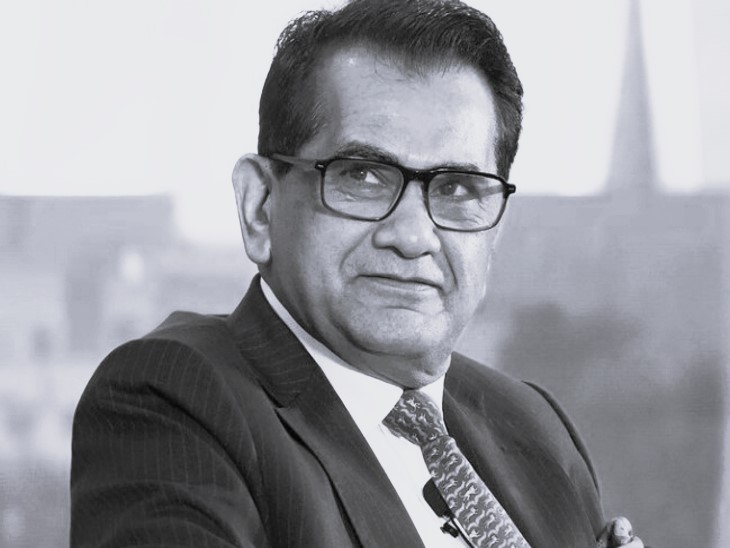
Amitabh Kant, former CEO of NITI Aayog and former G-20 Sherpa of India
The Strait of Hormuz is closed and global supplies have come to a standstill. In such a situation, the Prime Minister’s advice is not merely a temporary appeal for restraint. This indicates that energy security affects the everyday lives of Indians. When citizens are being advised to use public transport, reduce fuel consumption, transport goods by rail, limit unnecessary foreign trips, the message should be clearly understood. The disruption to a remote, narrow sea route has had a profound impact on household budgets, factory costs, transportation systems and even foreign exchange in India.
We are among the fastest growing economies in the world and our energy demand will continue to grow. Yet we are more dependent on fossil fuel imports. India imports more than 85% of its crude oil and about 50% of its gas needs. Even before the current crisis our fossil fuel import bill was around $180 billion. Ti has done.
Our installed capacity in non-fossil fuels has crossed 283 GW. This includes more than 150 GW of solar and 56 GW of wind energy. We have already achieved the target of achieving 50% of total installed electricity capacity from non-fossil sources before the 2030 deadline. 2.8 crore houses in the country have been electrified and more than 10 crore families have got clean cooking fuel. These are huge changes.
Economic equations have also changed. Solar energy is now among the cheapest sources of electricity generation in India. Even in the auctions of green ammonia, prices in India have been much lower than the international level. This progress shows that clean technologies are now firmly entrenched in India’s energy economy.
But the next phase must be much more ambitious. We need to think beyond the 500 GW non-fossil target by 2030. By 2025, China expanded its renewable energy capacity by more than 400 gigawatts in just one year, while we were able to add only 56 gigawatts. India has a special advantage from the climate point of view and if our objective is energy security then India should set a target of 1500 GW of clean energy capacity. This will certainly be ambitious, but not impossible. This target will also send a clear signal to markets, manufacturers, states and investors that India intends to achieve the energy transition of the next decade in five years. Without this ambition, it will not be possible for India to operate data centers and lead the next wave of AI. Because new data centers will have to be run on clean energy only.
This ambition cannot be achieved by increasing production capacity alone. If we lag behind in grid construction, we will not be able to create a 1500 gigawatt clean energy system. Generation capacity must keep pace with power evacuation arrangements, grid stability and demand-based readiness.
The transmission network will have to be expanded rapidly in areas rich in renewable energy. This should be done on a war footing and digitalization will play a major role in this effort. Then storage is equally important. Through this, intermittent renewable energy is converted into reliable electricity 24 hours a day. Every major tender for renewable energy should have provisions for reliable and dispatchable power supply.
India’s next leap in energy will not be determined by just increasing capacity, but by building a system that makes renewable energy reliable, affordable and safe. The current crisis has provided an opportunity. (These are the author’s own views)